

Blending isn’t about hiding flaws or simply making a wine taste better. It’s about combining different strengths to create balance. One grape might bring acidity, another tannin or color, and another ripe fruit or softer texture.
Winemakers can blend wines from different grape varieties, vineyard plots, barrels, or tanks. The result is a wine with more control, complexity, and balance than any single component might provide on its own. Classic wine regions around the world offer some of the best examples of how—and why—these combinations work.

How Are Wine Blends Created?
Historically, winemakers often fermented multiple grape varieties together. Today, many producers vinify varieties separately, giving them more control over the final blend.
Once the individual wines have fermented, the blending begins: winemakers taste each lot and test different combinations to find the right balance. Depending on the wine, blending can happen before, during, or after aging.
Early in a wine’s life, fermentation and other youthful aromas can make it harder to assess the final character by aroma alone. That’s why winemakers pay close attention to taste, texture, acidity, tannin, and structure.
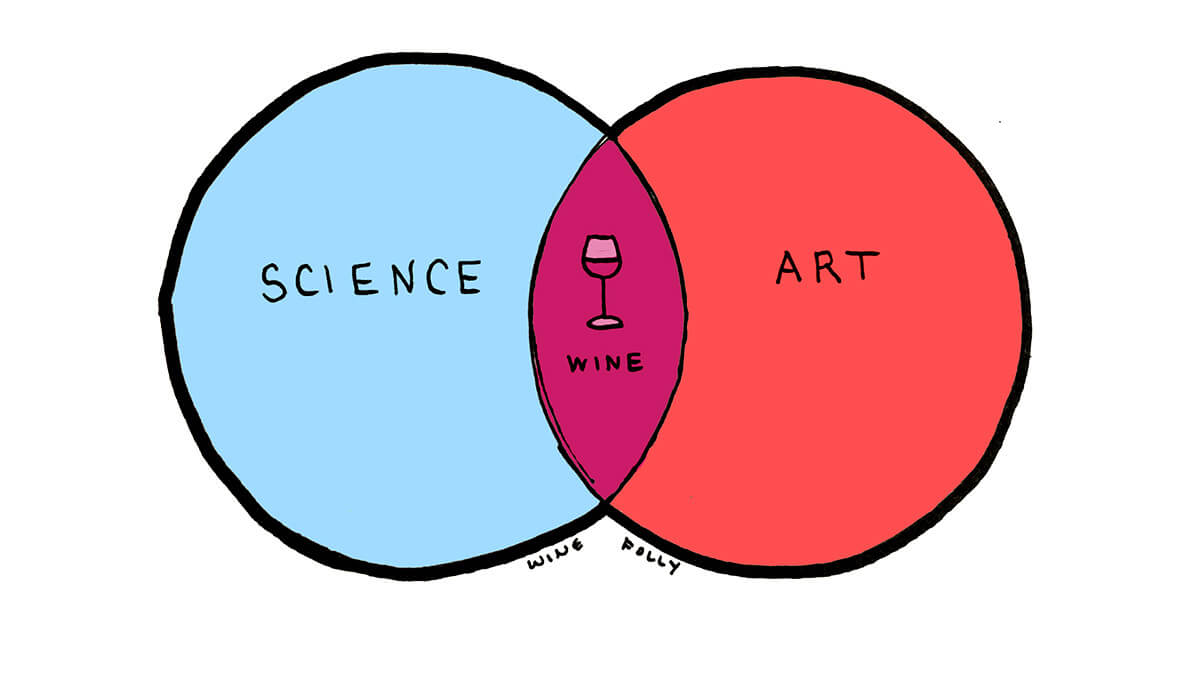
The Art of Wine Blending
Great blending takes years of practice, because small changes in proportion can dramatically change a wine’s balance. Great winemakers often use a combination of technical analysis and tasting. There’s rarely one “perfect” recipe; just the combination that best balances the wine that year.
Of course, blend recipes rarely translate perfectly from one vintage to the next. Each year the weather creates a new set of conditions that changes the way grapes ripen and make wine.

Famous Wine Blends & Why They Work
Classic blends aren’t random combinations. Over time, winemakers have learned which grapes complement one another, and what each variety brings to the glass.
Ever wonder why Cabernet Sauvignon and Pinot Noir rarely share a bottle? Tradition plays a big role, but so do their very different growing and structural profiles.
- Tradition: Centuries of winemaking have established classic combinations, from Bordeaux’s Cabernet-Merlot blends to the Rhône’s Grenache-Syrah-Mourvèdre.
- Climate: What grows together can go together. Varieties that thrive in similar conditions often make natural partners, but blending can also pair grapes with different strengths to create balance.
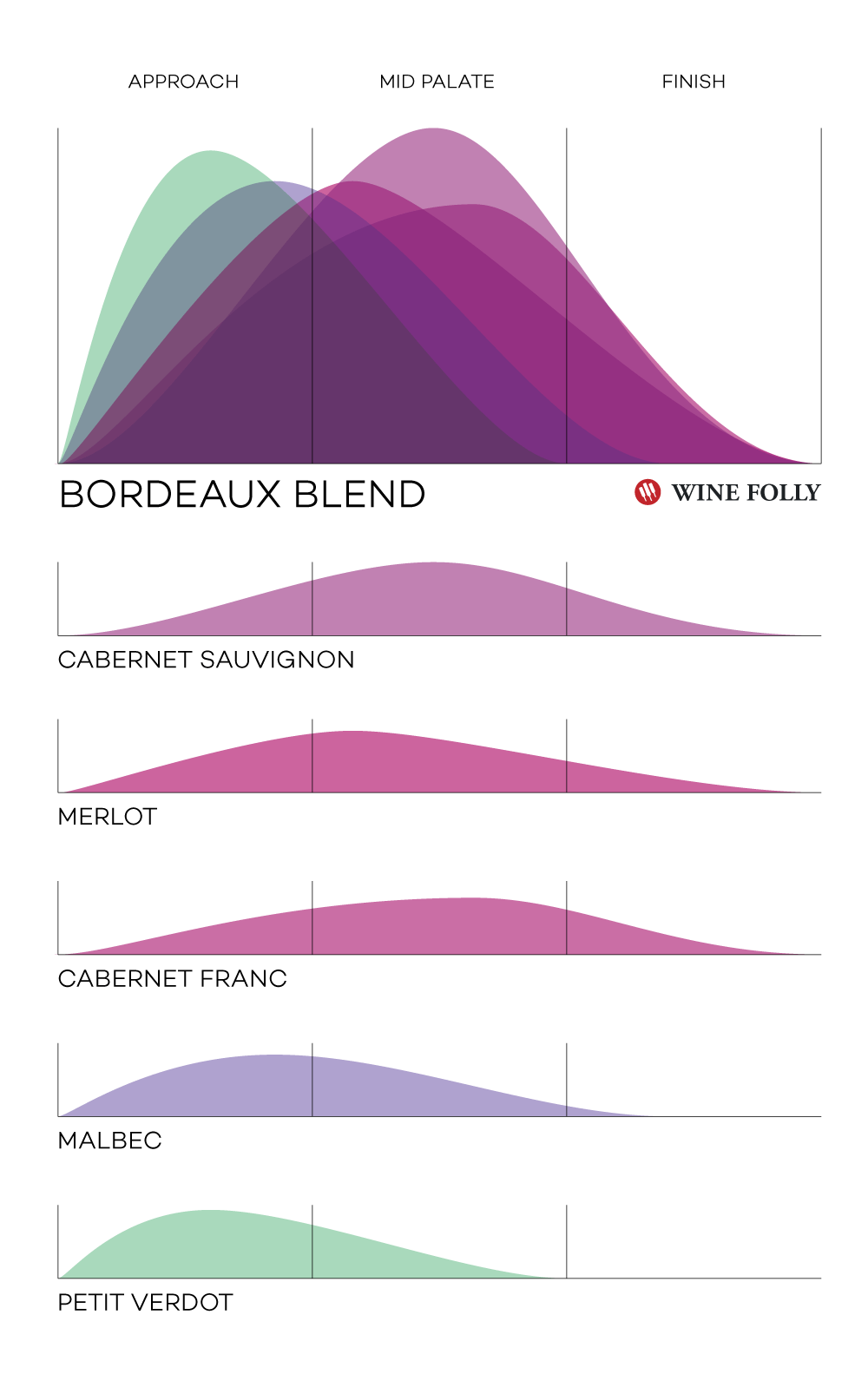
Bordeaux Blend
Bordeaux Blends are red wines built around Bordeaux’s classic varieties, especially Cabernet Sauvignon, Merlot, and Cabernet Franc. Producers often adjust the proportions from vintage to vintage depending on what each grape brings to the cellar.
-
Cabernet Sauvignon
Cabernet Sauvignon adds structure, tannin, black-fruit character, and herbal notes. Oak aging can add additional flavors and texture. Overall, the taste profile is big and long.
-
Merlot
Merlot can bring plush fruit, roundness, and softer tannins to a blend, balancing Cabernet Sauvignon’s structure and acidity. (In Bordeaux’s Libournais, or “Right Bank,” Merlot and Cabernet Franc take center stage.
-
Cabernet Franc
Cabernet Franc brings fresh red-fruit flavors, savory notes, and a lighter frame to the blend. It can also add peppery aromatics and lift to Merlot’s plush fruit.
-
Malbec
Malbec brings rich texture, dark fruit, and color to the blend. Its plush fruit can round out Cabernet’s structure and add depth without dominating the blend.
-
Petit Verdot
Petit Verdot is the small-but-mighty member of the Bordeaux lineup, adding tannin, floral notes, spice, and deep color. Petit Verdot is usually used in small amounts, although warmer regions such as Spain, Argentina, Australia, and parts of the United States can ripen it more reliably.
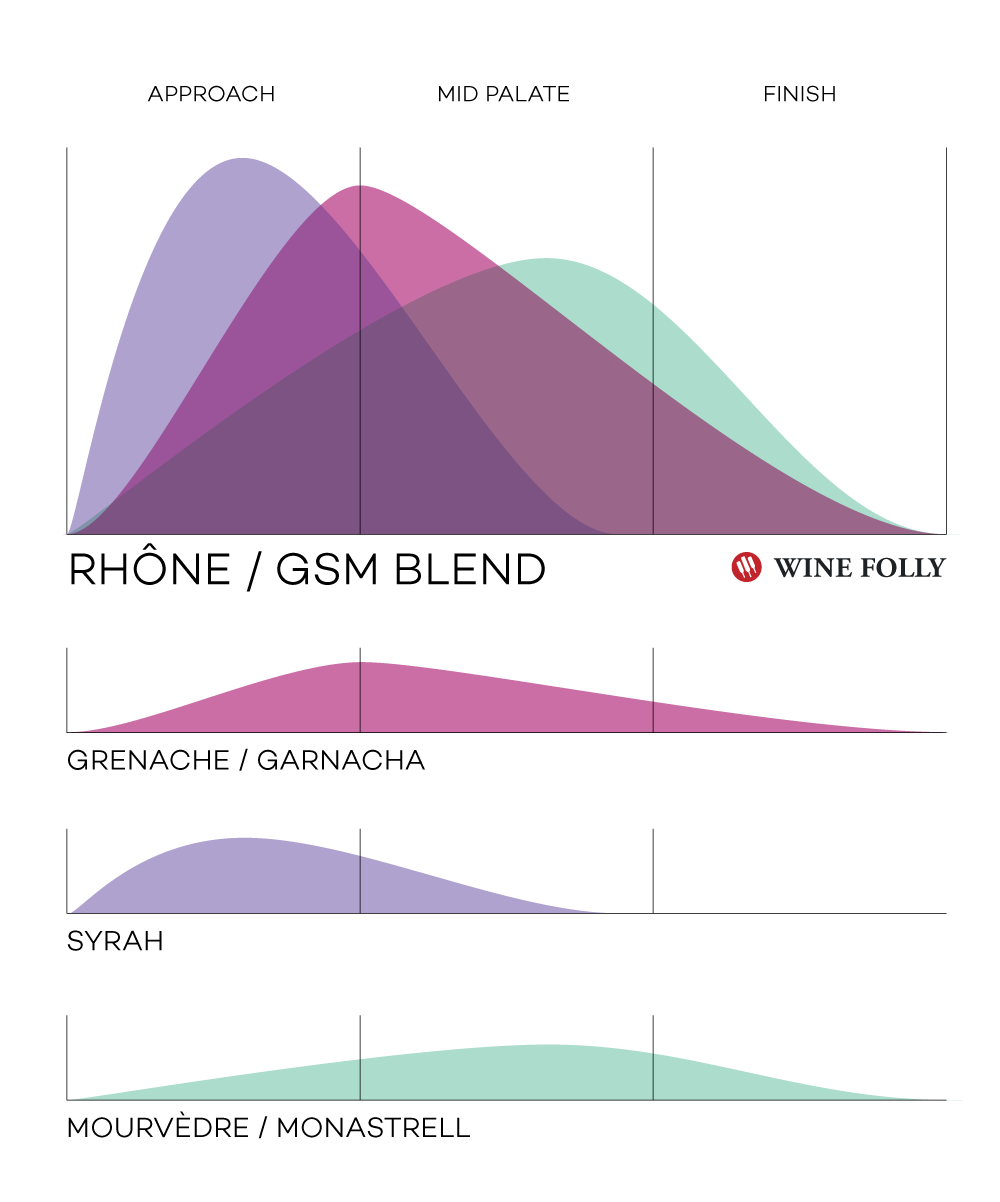
Rhône / GSM Blend
The Southern Rhône of France inspired what most areas call the “GSM” or Grenache-Syrah-Mourvèdre blend. Grenache is typically the backbone of Southern Rhône blends, with Syrah and Mourvèdre often providing additional color, structure, and spice. Up to 19 grapes (including white grapes) make this red wine. However, in Châteauneuf-du-Pape, law permits only 13 grape varieties, including both red and white.
-
Grenache
Grenache brings ripe red-fruit flavors, generous alcohol, and a broad, lingering finish, even though its relatively thin skins produce lighter color.
-
Syrah
Syrah brings darker fruit, color, tannin, and savory spice, adding structure and depth to Grenache’s red-fruit profile.
-
Mourvèdre (aka Monastrell)
Mourvèdre is the savory powerhouse of the trio, bringing dark fruit, game, pepper, tannin, and earthy complexity. It adds body and structure to the blend.
Others
Bordeaux and the Rhône may be the best-known examples, but classic blends show up around the world. In many regions, blending local varieties is part of the identity of the wine itself. Here are a few we’ve observed:
- Italy’s Super Tuscan Blend: This blend is a broad category of Tuscan wines that may feature Sangiovese, international varieties such as Cabernet Sauvignon and Merlot, or other grapes, depending on the producer. Sangiovese can bring bright acidity and red fruit, while Cabernet Sauvignon and Merlot can add structure, dark fruit, and plush texture.
- Washington’s CMS Blend: This Cabernet-Merlot-Syrah blends combine three grapes with very different strengths: Cabernet Sauvignon brings structure, Merlot adds round fruit, and Syrah contributes color, spice, and savory depth.
- Greece’s Rapsani Blend: Traditional Rapsani vineyards on the high-elevation slopes of Mount Olympus are planted with Xinomavro, Krasato, and Stavroto. Xinomavro offers raspberry and sun-dried tomato flavors with high tannin and acidity. Krasoto brings rounder, softer, plummy fruit and a smooth finish. Stavroto adds color.
- Portugal’s Douro Tinto Blend: Douro red wines are commonly blends of indigenous varieties such as Touriga Franca, Touriga Nacional, and Tinta Roriz (aka Tempranillo). Touriga Nacional brings dark fruit, floral aromas, color, and structure, while Touriga Franca can add perfume and elegance. Tinta Roriz contributes acidity, tannin, and red-fruit character.