

Rioja is powered by Tempranillo, the structural backbone behind the region’s most age-worthy reds.
Historically, Rioja defined quality by time in barrel and bottle. But global tastes shifted toward vineyard identity. In other words, drinkers wanted to know where wines were grown. Rioja’s modern framework retains its famous aging tiers while adding geographic detail, allowing producers to highlight terroir without abandoning tradition.
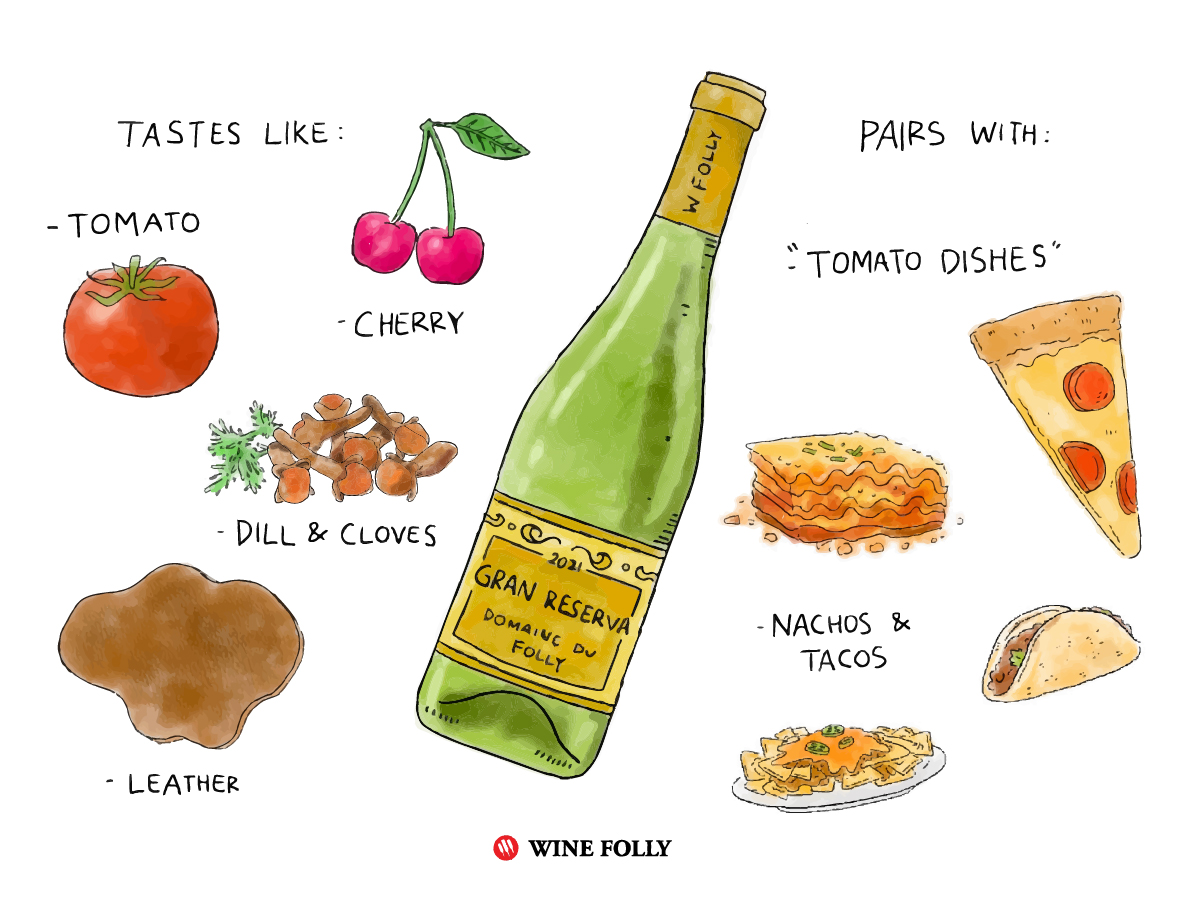
Rioja Wine
Winemakers shape flavor through fermentation and aging. Across all versions, you can expect bold, structured flavors and firm tannins. Younger wines have zippy fruit, while the longer-aged wines pick up oak flavors from the barrel.
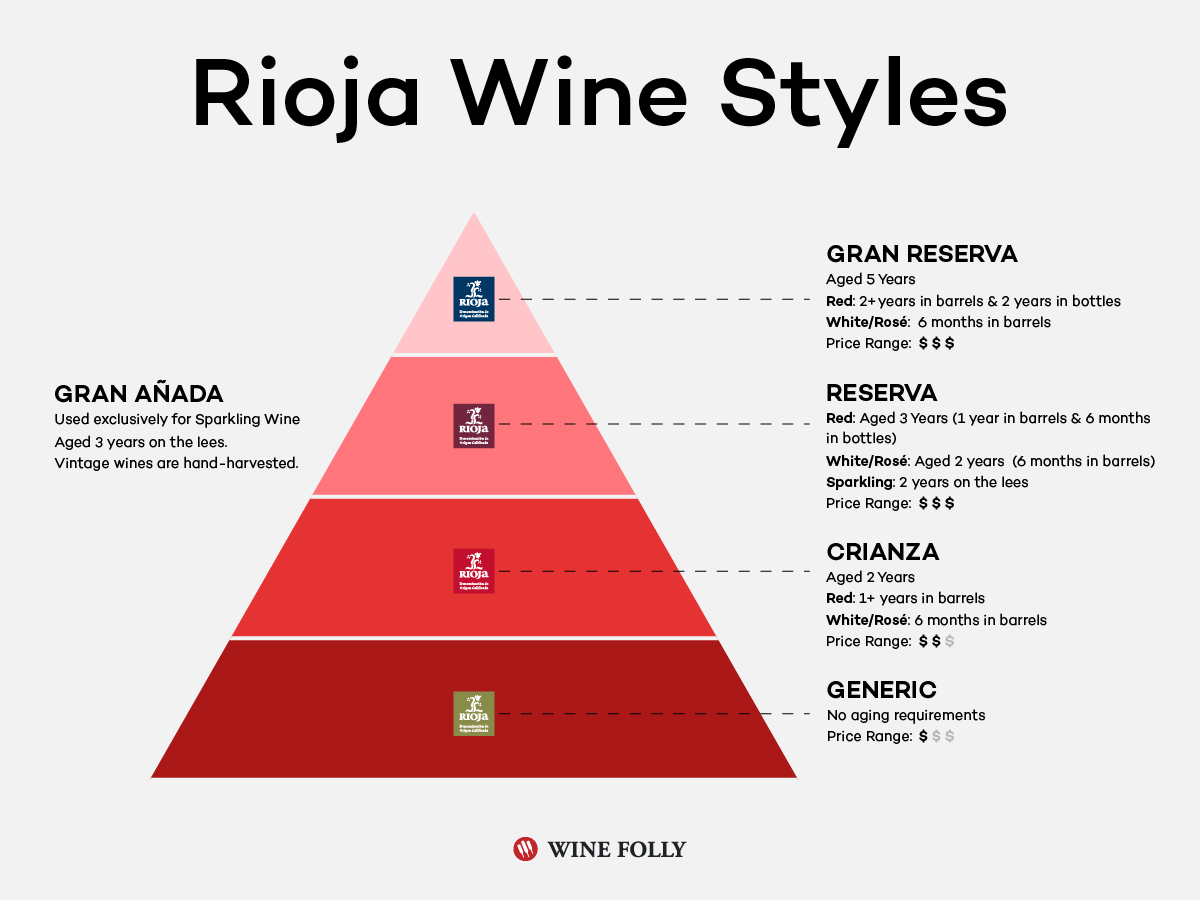
Rioja Classification
Rioja operates under one of Europe’s most tightly regulated appellation systems, overseen by the Consejo Regulador DOCa Rioja, which now also recognizes village and vineyard-designated wines.
There are four main styles of Rioja wine. Tasting the four tiers side by side instantly reveals Rioja’s stylistic spectrum.
Rioja
Wines in their first or second year that retain their primary freshness and fruitiness.
Rioja used to be called “vin joven,” which literally means “young wine.” Now, when a wine is labeled Rioja, you can assume it’s a young, fruit-driven bottling with minimal oak influence.
These wines don’t have the tannin structure or oak flavors common in the higher-end wines. But they make up for in zippy fruit. Try this level of Rioja as a great example of Tempranillo’s true varietal characteristics.
Crianza
Red wines must age for two years, with at least one year in oak barrels. White and rosé must age for 18 months total, including at least six months in cask.
Crianza presents the most accessible level of Rioja wines, especially since most can be found for around $15.
At the Crianza level, the wines most commonly age in used oak, so the oak flavors are not as strong. The goal of Crianza is to produce a high-quality wine for daily drinking.
With Tempranillo’s natural high tannin, Crianza wines express quite a bit more body than Merlot. It’s like a great-value Cabernet Sauvignon.
Reserva
Selected red wines of the best vintages with an excellent potential that have been aged for a minimum of three years, with at least one year in casks.
Reserva marks the point where Rioja shifts from fruit-driven to tertiary complexity. At this level, winemakers often age their wines longer than the minimum and select better grapes. Many Rioja wine enthusiasts swear by the Reserva level because it lies between super fruity Crianza and oaky, bottle-aged Gran Reserva.
Gran Reserva
Selected wines from exceptional vintages which have spent at least two years in oak casks and three years in the bottle. For white wines, the minimum aging period is four years, with at least one year in casks.
The Gran Reserva level of Rioja undergoes the most oak-aging. This creates the firmest tannins and longest aging potential.
Most winemakers select the best grapes for this level and age the wines well beyond the legal minimum. This means many Gran Reservas are released several years after the legal minimum.
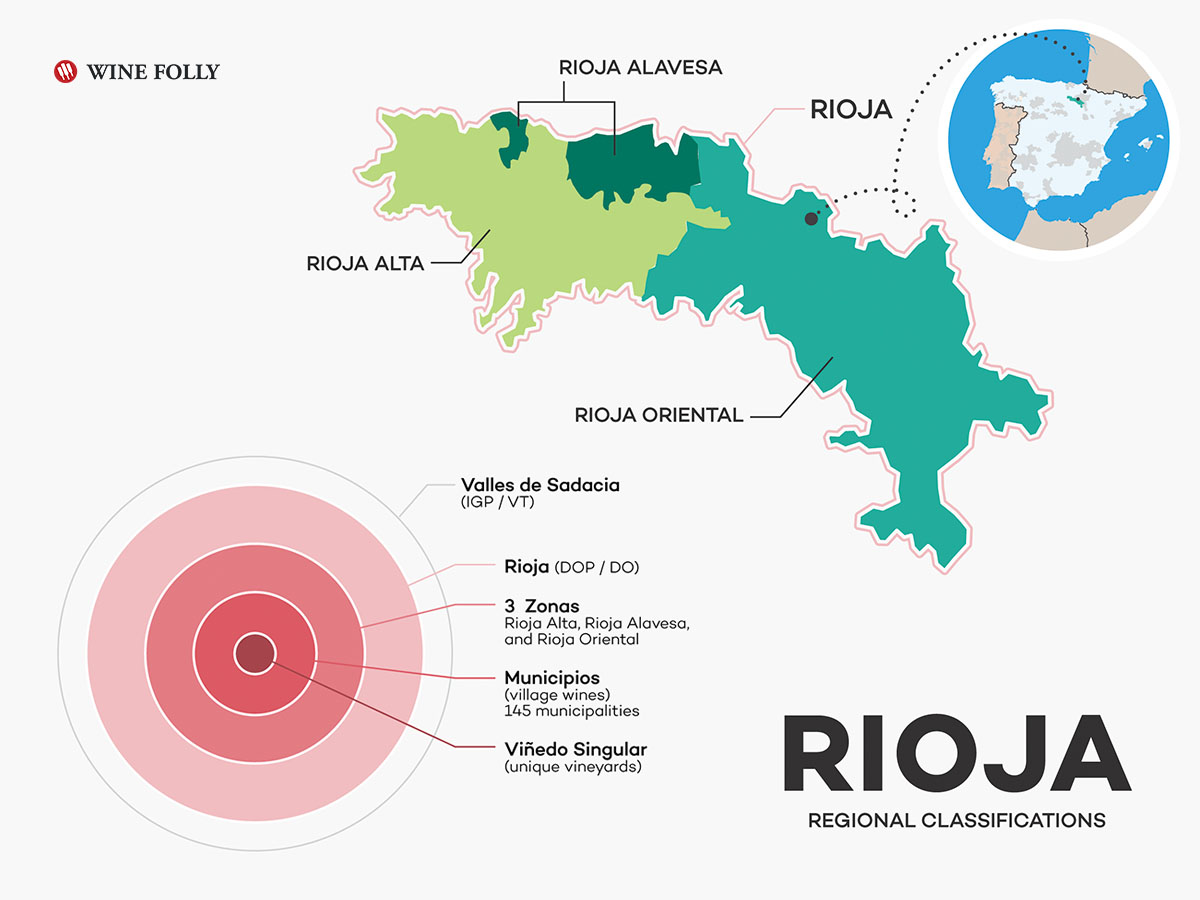
Rioja’s Modern Classification System
The following classifications can also appear alongside Crianza, Reserva, or Gran Reserva. One label now shows both origin and aging.
The hierarchy includes:
- Zona wines — grapes from one official subregion (more on these below)
- Village wines — grapes from one municipality
- Single-vineyard wines — grapes from one specific site
These designations can appear alongside Crianza, Reserva, or Gran Reserva, meaning a label can communicate both aging style and geographic identity.
Rioja Region
Rioja sits in northern Spain along the Ebro River valley, about two hours from Bilbao.
The entire valley is moderated by the Sierra Cantabria, a jagged mountain range that shields the region from Atlantic influences. Besides wine, the area is known for its delicious tiny artichokes, white asparagus, and piquillo peppers.
For wine, the area splits into three sections: Rioja Oriental (formerly Baja), Rioja Alta, and Rioja Alavesa.
- Rioja Oriental: Formerly the Rioja Baja, the name was changed in 2018 to indicate this region as the most eastern of the three (which is the meaning of Oriental). The wines from this region are fruit-forward, richer, rounder, and more lush. You can still find the characteristic fig flavors in older wines from this region, but generally, the wines are designed to drink right away.
- Rioja Alta: Thanks to elevation and cool temperatures, wines from Rioja Alta have higher tannin and acidity than Rioja Oriental – they also tend to be more elegant.
- Rioja Alavesa: This region’s wines bear a resemblance to the wines of Rioja Alta, often showing brighter acidity and a more lifted structure due to higher elevations and limestone soils.
The distinctions between Rioja Alta, Rioja Alavesa, and Rioja Oriental are sensory. Elevation, soil, and temperature shape acidity, tannins, and aromatics.
Cooler, higher vineyards often yield lifted structure and freshness. Warmer areas lean toward ripe fruit and generous body.
Food Pairing with Rioja Wine
Wines from Rioja Alta and Alavesa pair well with baked pasta and other tomato-based dishes, where the natural acidity is already being balanced with cheese and grains.
High-fat meats like roasted pork and chorizo sausage, or nearly any lamb dish (a popular choice in many areas of Rioja), match especially well.
The richer, more lush wines from Rioja Oriental pair well with spicier foods like chili con carne or richer dishes like paella, where the wine’s structure can provide a backbone to complement a range of flavors and textures.
Older, mellow wines pair beautifully with aged cheeses and cured meats.
Rioja Beyond Red Wine
Rioja’s reputation was built on reds, but the region’s range runs wider than most people realize. White wines span crisp and citrusy to barrel-aged and savory. Rosados range from pale and delicate to deeply colored and structured. Rioja also produces traditional-method sparkling wines, proving the region’s vineyards can deliver far more than one classic style.
Learn more about Rioja Classifications to help narrow down which tasty Spanish red you’ll open next.