

Port is a fortified wine from Portugal that comes in red, white, and rosé styles, ranging from dry to very sweet.

Port is often enjoyed with dessert or cheese, but different styles can also be served as an aperitif or alongside savory dishes.
Port comes in several styles, including Ruby, Tawny, White, and Rosé.
While much of the Port we see in the supermarket is of average quality, there are many fine Port wines that are highly treasured and cost several hundred dollars. Let’s get up to speed on this fascinating, historic sweet red wine.
What Does Port Wine Taste Like?
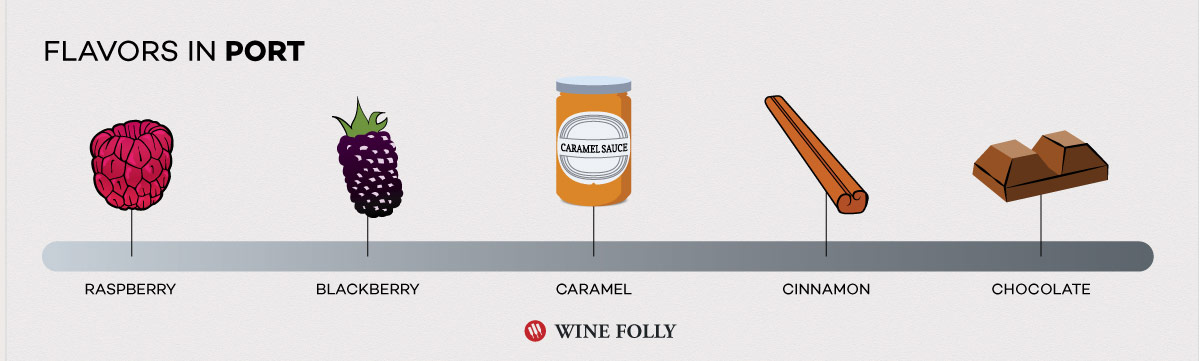
Port is a sweet wine with flavors of raspberry, blackberry, caramel, cinnamon, and chocolate sauce. Sound delicious? It is!
The two major styles of red Port are Ruby and Tawny. Ruby Ports emphasize fresh berry and dark-fruit flavors, while Tawny Ports develop more dried-fruit, nutty, caramel, and spice flavors through wood aging.
Older Tawny Ports can develop layers of dried fruit, hazelnut, almond, butterscotch, vanilla, honey, and spice. Older Tawny Ports, including those labeled 20, 30, or 40 Years Old, can show remarkable layers of complexity.
The Common Styles of Port Wine
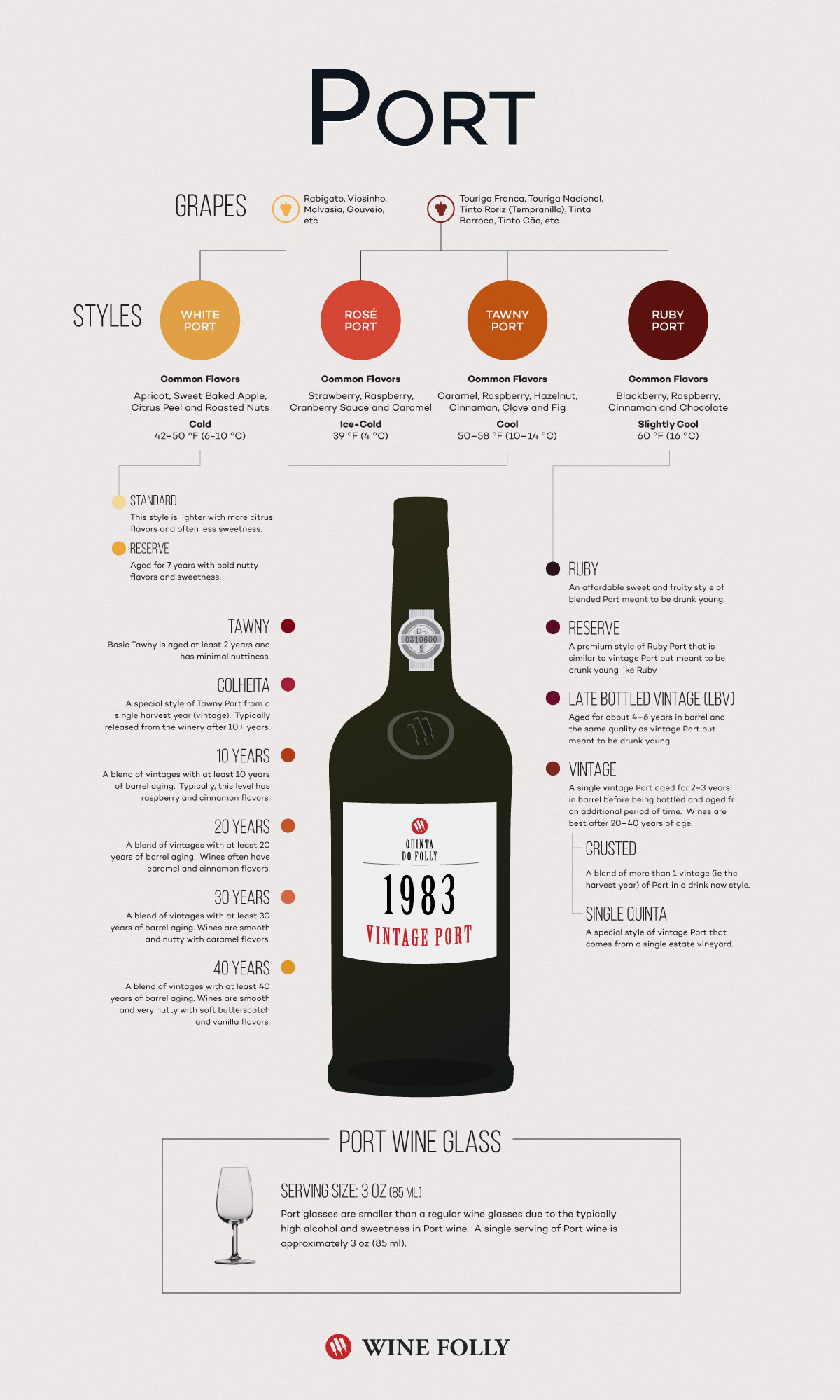
Port comes in several styles and categories. Four broad styles you’ll commonly encounter are Ruby, Tawny, White, and Rosé:
- Ruby (Red) Port: a fruit-driven style that includes Ruby, Reserve Ruby, Late Bottled Vintage (LBV), Crusted, and Vintage Port.
- Tawny Port:a wood-aged style with flavors of dried fruit, nuts, caramel, and spice.
- White Port: made with indigenous white grapes including Rabigato, Viosinho, Gouveio, and Malvasia
- Rosé Port: a young, aromatic style made with light maceration of red grapes, with flavors of cherry, raspberry, and strawberry.
Serving Port Wine
Serving temperature depends on the style: serve Ruby Port around 54–61°F (12–16°C) and Tawny Port around 50–57°F (10–14°C). White and Rosé Ports are best served chilled. A popular way to serve White Port in the summer (with a meal) is on the rocks with a peel of lime!
Pairing with Food
Port wine pairs wonderfully with richly flavored cheeses (including blue cheese and washed-rind cheeses), chocolate and caramel desserts, salted and smoked nuts, and even sweet-smoky meats (barbecue anyone?).

What Makes Port Unique?
One of the most important qualities of true Port is the unique blend of Portuguese indigenous grapes. Port grapes include Touriga Franca, Touriga Nacional, Tinta Roriz (aka Tempranillo), Tinta Barroca, and Tinta Cão, and there are said to be at least 52 varieties! Each variety contributes different characteristics, from color and tannin to aroma, acidity, and fruit character. For example, Touriga Nacional adds blueberry and vanilla notes, and Touriga Franca adds raspberry and cinnamon notes.

Grape Stomping
Traditional Port ferments in lagars where people stomp grapes with their feet. Today, many producers use mechanical and automated equipment, including robotic treading tanks, electric crushers, and automatic presses.
Special Wine Glass
A Port wine glass is smaller than a regular wine glass and the serving size is approximately 3 oz.
Port Wine and Cooking
Port is a popular addition to chocolate cakes, sweet gooey chocolate sauces. It’s also commonly reduced into a sauce. Reductions are wonderful over savory dishes like steak (especially steak topped with blue cheese).
Chefs often simmer Port wine and reduce it to a thick sauce. Port reduction is used much like balsamic glaze.
Port can also add sweetness, fruitiness, and depth to sauces and desserts.
Which Port to Use in Cooking?
Ruby Port is a versatile choice for cooking and is often the most affordable style. This style is red and will impart red berry and cinnamon-like flavors into your sauce. Remember, a true Portuguese Ruby Port may cost $10–$20 a bottle, but will last open for longer than a table wine.
Port Wine Substitute
In a pinch, substitute a full-bodied dry red wine with a small amount of brandy and sugar to approximate Port’s body, sweetness, and alcohol.

How Long Does Port Last Open?
Ruby Port is best consumed within about 8–10 days of opening. Tawny Port generally lasts 3–4 weeks, while older Tawny and Colheita Ports can last several months.
Tawny Port stays fresh for about a month. Keep wines longer by storing them in a cool dark place and using a vacuum preserver to remove oxygen.
How Long Can Port Age?
Most Ruby and Tawny Ports are ready to drink when bottled. Exceptional Vintage Ports can age for many decades, with some surviving for 100 years or more under ideal conditions.