

You know what wines you like, but how do you describe them? Learn how to use wine tasting terms the right way to get the wine you want.
Learning the fundamentals of tasting descriptions will also help you decipher wine writing and let you buy wine more confidently.
Using Wine Tasting Terms To Get What You Want
Besides referring to wine ratings, tasting terms are the only way we can quantify what a wine tastes like before we buy it. Learning what these words mean (and also how to use them yourself) is a very powerful skill to have in order to buy exactly what you want.
Some of the most useful wine tasting terms to know fall into these 4 categories:

The Fruit Level
First things first, you’ll want to start identifying the fruit level in the wine. It doesn’t matter if the wine is light, rich, sweet, or dry; they can all be categorized by the fruit level.
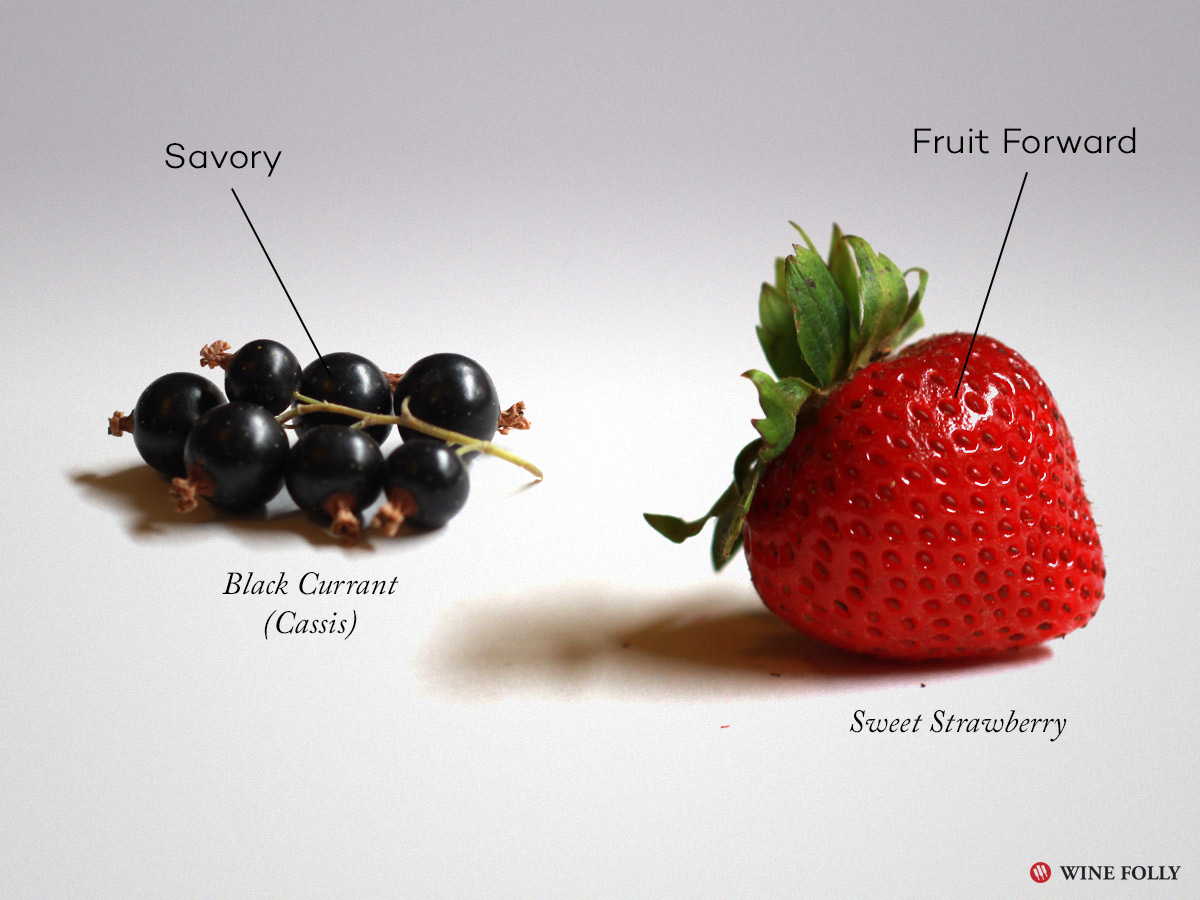
We have many ways of describing fruitiness in wine, but pretty much all wines can be shuffled into just two main categories: Fruit-Forward or Savory.
“Fruit-Forward”
Common Terms: Fruit-Driven, Sweet Attack, Jammy, Extracted, Flamboyant, Sweet Tannin, New World Style, Juicy, Ripe
“Fruit-Forward” is the most commonly used term to describe a wine with dominant flavors in the sweet fruit realm. This wine term doesn’t mean that the wine is sweet; it just means that it is bursting with sweet fruit smells.
-
Fruit-Forward – Red Wine Terms
Sweet Raspberry, Maraschino Cherry, Blackberry, Blueberry, Jam, Prune, Candied Fruit, Black Raisin, Baking Spices, Toffee, Vanilla, and Sweet Tobacco
-
Fruit-Forward – White Wine Terms
Sweet Meyer Lemon, Baked Apple, Mandarin Orange, Ripe Peach, Mango, Sweet Pineapple, Ripe Pear, Cantaloupe, Crème Brûlée, Caramel, and Vanilla
“Savory”
Common Terms: Herbaceous, Earthy, Rustic, Food-Friendly, Old World Style, Bone Dry, Elegant, Closed, Vegetal, Stalky, Stemmy, High Minerality
Savory, earthy, or herbaceous wines are the antithesis of fruit-forward wines. While these terms don’t really do this wine profile justice, they help describe the dominant flavors of the wine in the not-sweet fruit category.
It’s not that these wines aren’t fruity; in fact, most are loaded with fruit flavors in the tart/sour/bitter spectrum. For example, imagine biting into a bunch of raw black currants (cassis) or cranberries.
-
Savory – Red Wine Terms
Cranberry, Rhubarb, Black Currant (aka Cassis), Green Bell Pepper, Green Peppercorn, Olive, Wild Strawberry, Sour Cherry, Mulberry, Bilberry, Peony, Wild Blueberry, Dried Herbs, Game, Sage, Leather, Tobacco, Charcoal, Tar, Underbrush, Garrigue, Gravel, Torrefaction, Mineral-Driven, and Woodsmoke
-
Savory – White Wine Terms
Lime, Lemon, Pith, Quince, Bitter Almond, Green Apple, Apple Skin, Gooseberry, Jalapeño, Grapefruit, Green Papaya, Thyme, Chervil, Grass, Flint, Chalk, Petrichor, Minerally
The Sweetness Level
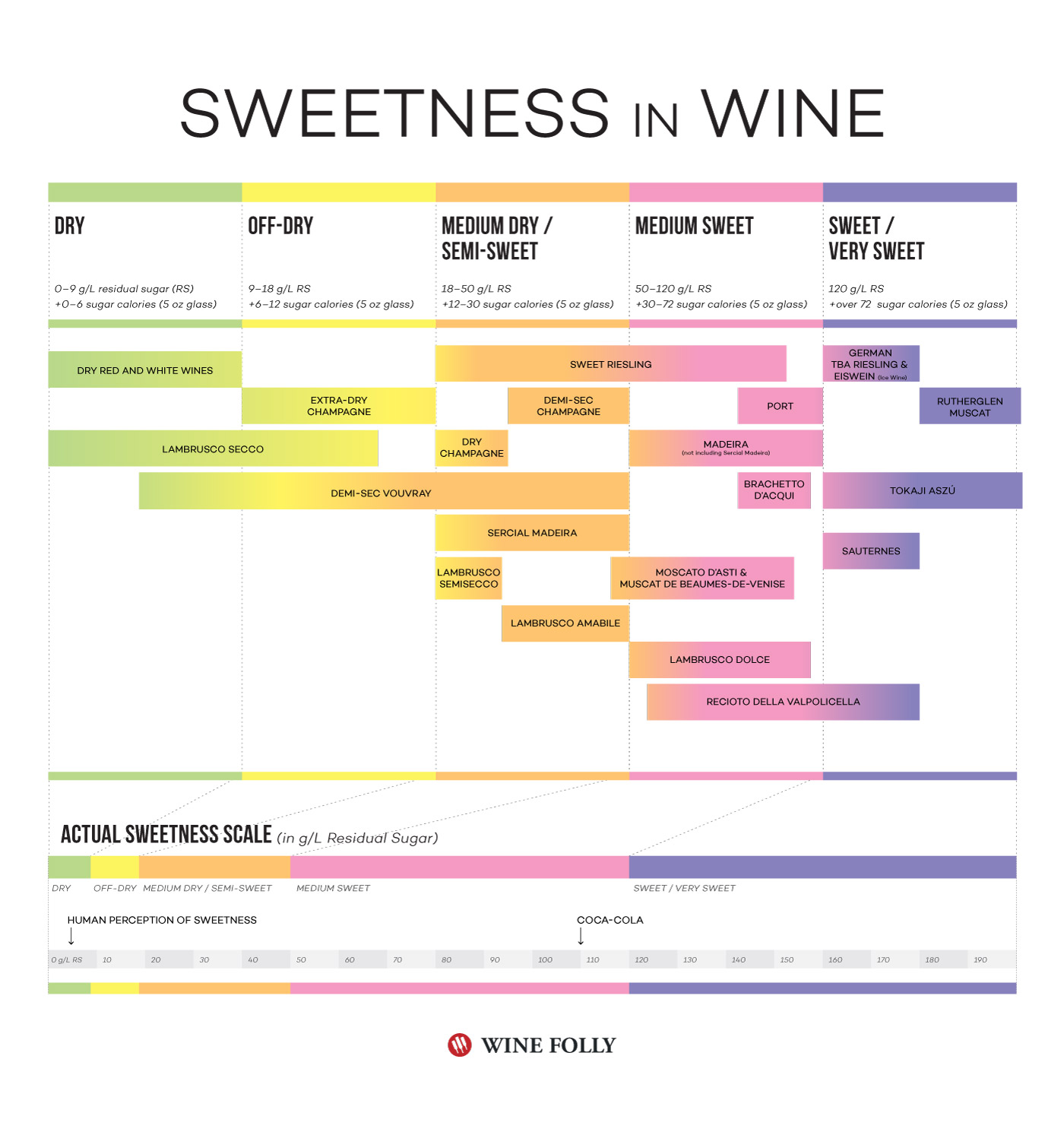
Wines get their sweetness from residual sugar (RS), which is leftover glucose from grape juice that wasn’t completely fermented into alcohol.
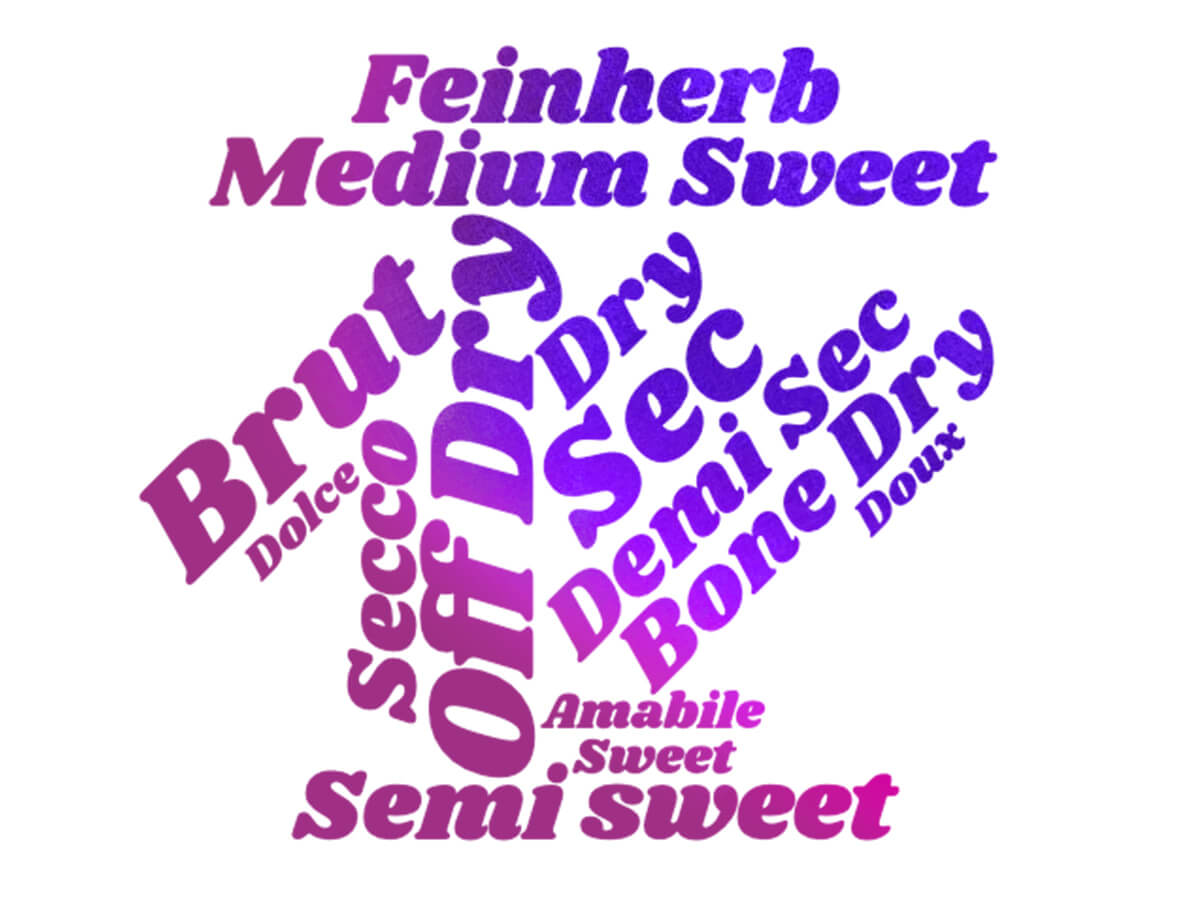
However, our sense of taste perceives sweetness at varying levels. To keep it simple, most of us characterize the sweetness of still wines into four levels.
“Bone Dry”
This term implies extreme dryness, with no perception of residual sugar, and is usually accompanied by astringency. Red wines get astringency from tannins and/or their savory or bitter fruit flavors.
White wines get astringency from a quality that sommeliers and winemakers often refer to as phenolic bitterness, which is often described as the taste of grapefruit pith or quince fruit.
“Dry”
Most still wines fall into the dry category, even though our taste buds might tell us differently. Dry wines range from no residual sugar to 1 gram per 5-oz serving (150ml).
“Off-Dry”
This is a popular term for wines with a touch of residual sugar, which can range from 2–3 grams per 5-oz pour.
Most off-dry wines are white wines, although on rare occasions, you can find high-quality Italian red wines that fall into the off-dry category.
High-acidity wines like Riesling will taste drier than lower-acidity wines (like Viognier) at the same actual sweetness level.
“Sweet”
Sweet wines are generally dessert wines and have a wide range of sweetness varying from about 3–28 grams of sugar per 5-oz glass depending on the style.
For example, among the most lusciously sweet wines in the world are Canadian and German Ice Wine, Tawny Port, Tokaji, and Rutherglen Muscat.
Champagne: The sweetness levels in sparkling wines use terms like Brut and Demi-Sec. Find out about Sweetness in Champagne
The Body Profile
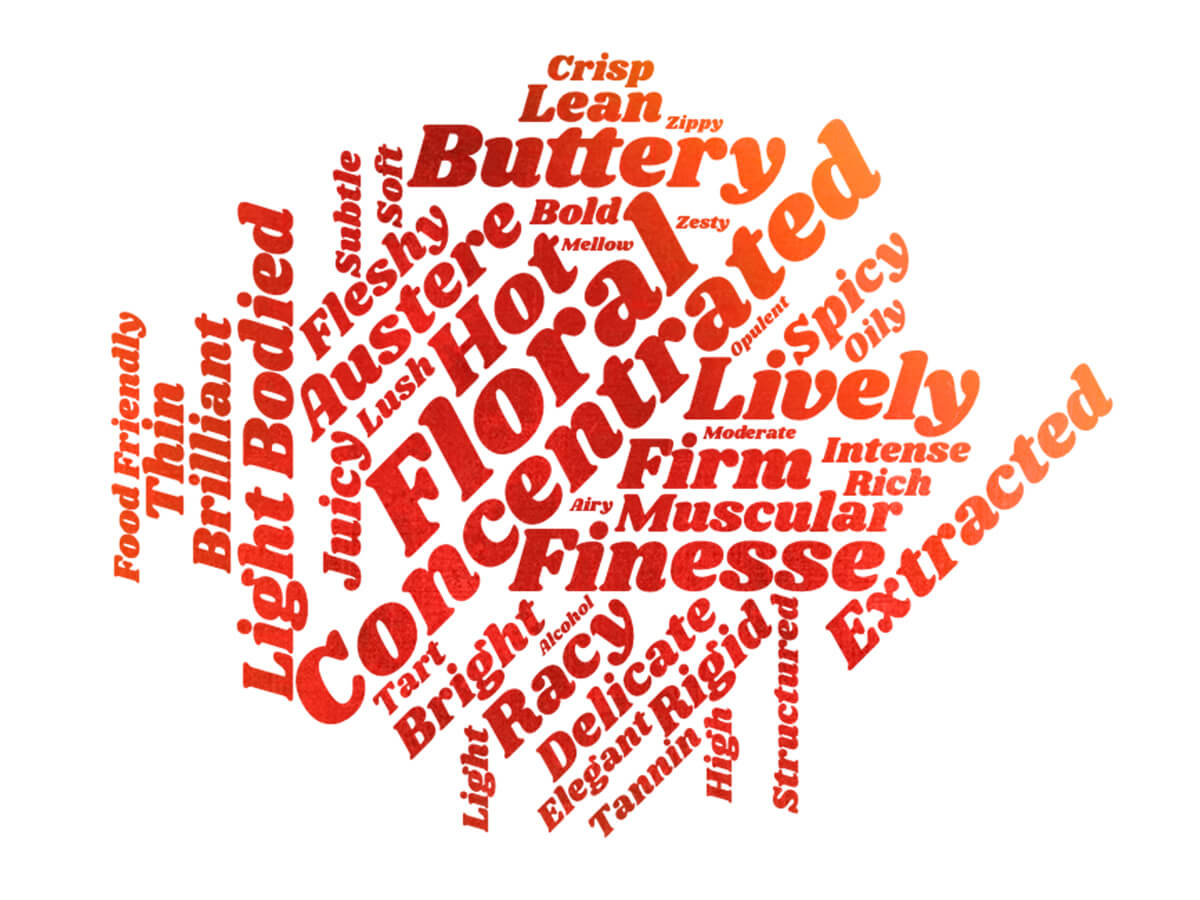
Now that you have a good understanding of the main fruit categories and sweetness, you can focus on the body. Think of the body of a wine as a spectrum, like the difference between skim and whole milk.
Of course, there are many factors that affect how we perceive body, from alcohol level and tannin to acidity, so it’s not an exact science.
TIP: Some wine varieties fit into all three body styles depending on how they’re made.
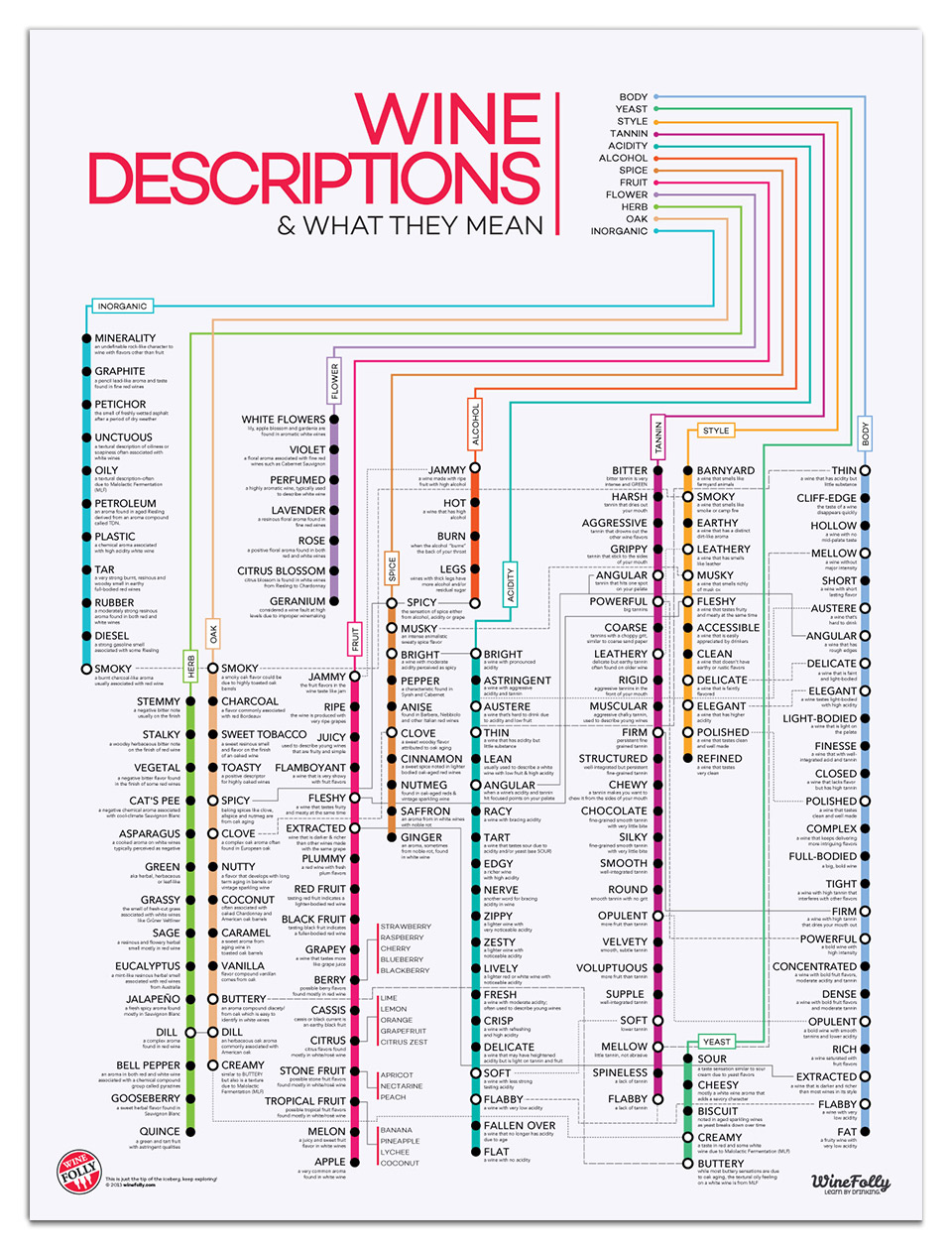
“Light-Bodied”
Light-bodied wines sit in your mouth more like a delicate, unsweetened iced green tea or a refreshing lemonade. They may still have a long aftertaste that tingles on your tongue, but they don’t fill your mouth as whole milk does.
Generally speaking, most light-bodied wines have lower alcohol levels, lower tannin, and higher acidity. Of course, there will always be a few exceptions.
-
Light-Bodied – Red Wine Terms
Subtle, Delicate, Elegant, Crisp, Thin, Finesse, Bright, Floral
-
Light-Bodied – White Wine Terms
Light, Zesty, Airy, Lean, Racy, Crisp, Zippy, Austere, Long Tingly Finish, Brilliant, Lively
“Medium-Bodied”
Red wines tend to benefit more from this middle category than white wines. Medium-bodied red wines are smack dab in the middle of the spectrum between a light red with lower tannin and a full-bodied red with high tannin. Medium-bodied red wines are usually called “food wines”.
-
Medium-Bodied – Red Wine Terms
Food-Friendly, Moderate, Elegant, Juicy, Spicy, Fleshy, Tart, Mellow, Soft
TIP: Several classic medium-bodied red wines use little to no oak aging.
“Full-Bodied”
Full-bodied wines fill your palate with their texture and intensity. As a general rule, full-bodied red wines have high tannin and are usually high in alcohol, above 14% ABV.
Alcohol and tannin act more like textures on our palate, which is why they are key components of full-bodied red wines. Some full-bodied wines stand on their own and are better not matched with food. Conversely, a few red wines are so bold and bitter with tannin that they almost need a rich, fatty food (like steak) to smooth out the tannin.
-
Full-Bodied – Red Wine Terms
Rich, Lush, Opulent, Rigid, Intense, Bold, Extracted, High Alcohol, High Tannin, Firm, Structured, Muscular, Concentrated, Hot
-
Full-Bodied – White Wine Terms
Rich, Lush, Oily, Buttery
TIP: Wines aged longer in new oak barrels tend to taste bolder.
The Finish
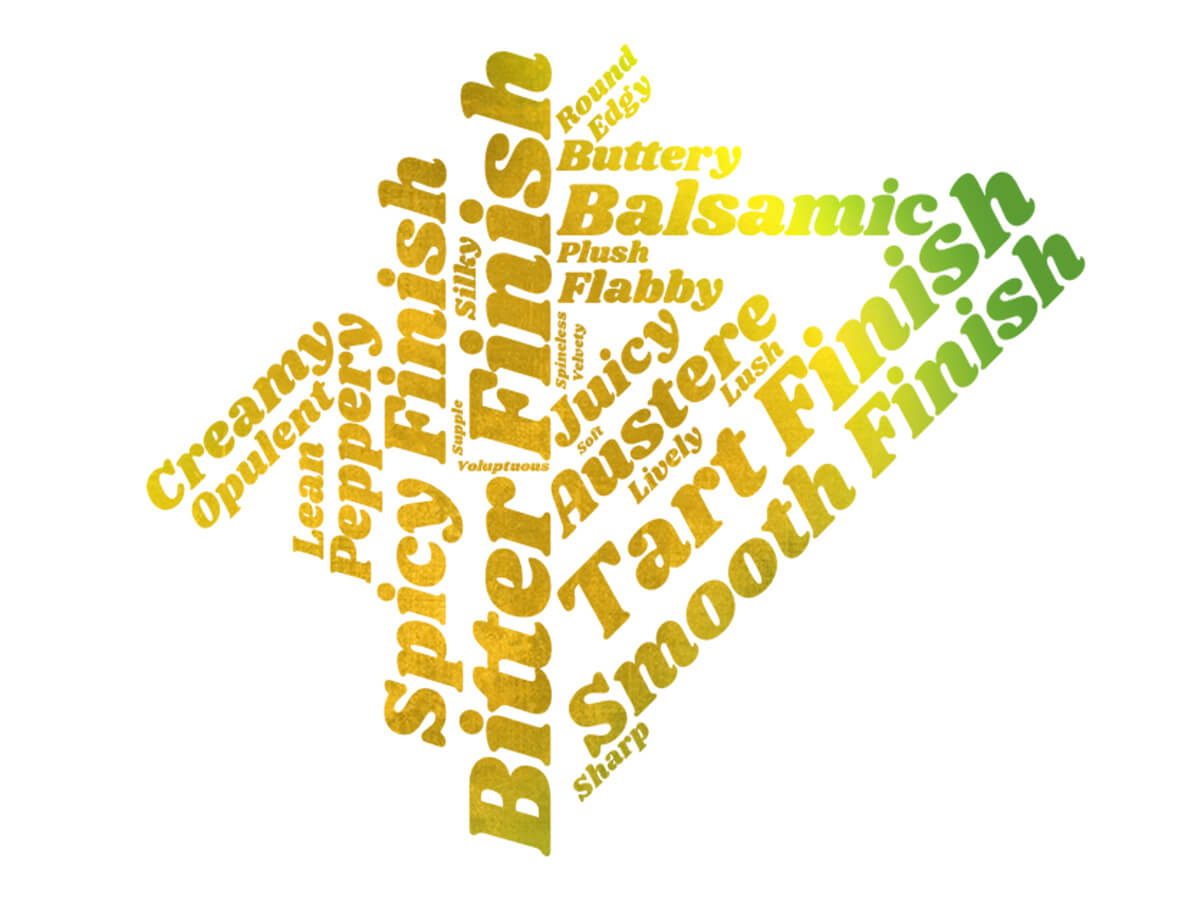
It’s common to pause after first tasting a red wine because of the effect the aftertaste or finish has on the flavor. The finish is often the defining factor between a mediocre and an awesome-tasting wine. So, what are the common types of finishes in wines?
“Smooth Finish”
Common Terms: Plush, Round, Velvety, Supple, Opulent, Voluptuous, Creamy, Buttery, Lush, Soft, Silky, Spineless, Flabby
This is the most requested style of finish for wine. However, smooth isn’t really a detailed enough description to get what you might want. There are essentially three types of smooth finishes in wines:
- Tart Finish: This is a common style of finish on higher acidity wines. These wines begin with tart fruit flavors and have subtle bitterness on the finish. For the most part, this style of finish is very common in wines from cool-climate wine-growing regions or from cool vintages.
In super premium light white wines, a tingling, tart finish is considered a great quality and usually lasts about 15 to 20 seconds.
- Sweet Tannin Finish or Smoky Sweet Finish: This style of finish is common on oak-aged red wines.
- Dried Fruit Finish: This style of finish is often found in aged red wines and red wines that are lighter in body and made with less oak aging.
“Spicy Finish”
Common Terms: Juicy, Sharp, Balsamic, Austere, Peppery, Lean, Edgy, Lively
Wines are sometimes described as spicy, and this trait can be more intense in the wine’s finish. The sensation of a spicy finish on a wine is a sharp burning sensation that could be compared to the feeling in your nose you get from eating wasabi or horseradish.
Many of us think of this type of finish as an alcoholic burn, but this is not always the case. There are a variety of reasons why wines have a spicy finish, from the type of grape (Cabernet Sauvignon and Barbera are known for their phenolic qualities) to the type of aroma compounds that are prevalent in a wine.
While some spicy finish wines are excellent, this characteristic can sometimes signal a wine that’s out of balance.
“Bitter Finish”
Bitterness in red wines is from tannins and bitterness in white wines is called phenolic bitterness.
Bitterness is more like an astringent feeling that has the sensation of scraping the insides of your mouth. We now know that this sensation in red wines is an interaction between proteins in our saliva and a type of tannin called “condensed tannin” that will build up on your palate over time.
Bitterness on the finish is unpopular, but it’s actually an amazing trait when you’re pairing wine with rich fatty foods.
-
Bitter – Red Wine Terms
Chewy, Muscular, Structured, Firm, Rigid, Closed, Dried Herbs, Oregano, Bay Leaf, Bitter Chocolate, Baker’s Chocolate, Bitter Herbs, Austere, Angular, Grippy, Harsh, Coarse, Dense
-
Bitter – White Wine Terms
Austere, Citrus Pith, Quince, Bitter Almond, Green Mango, Green Almond, Chalk