

Victoria, Australia, may be a well-kept secret of the international wine scene, but its Yarra Valley wine and other regional offerings prove the state is one of the most diverse wine-growing regions in the world.
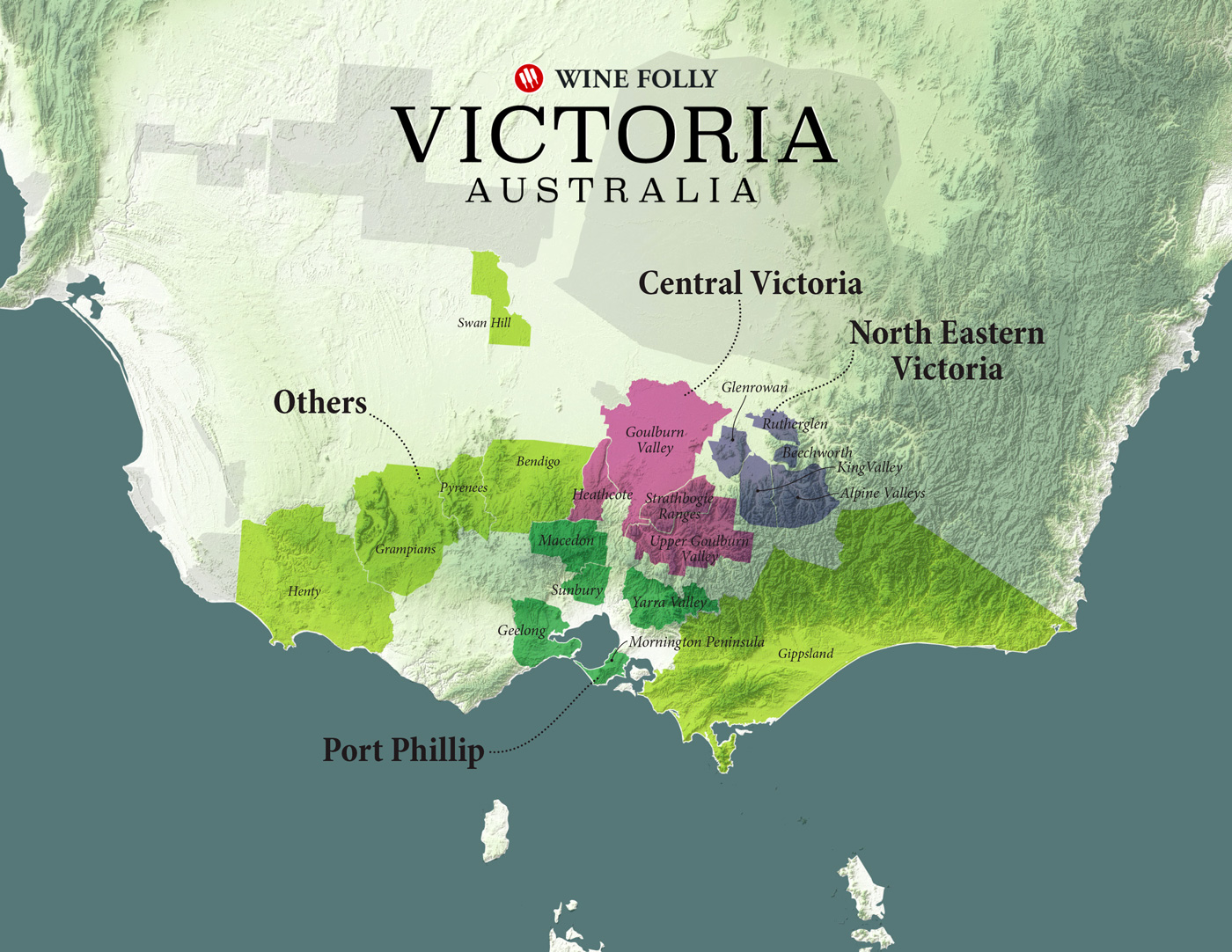
Victoria has a largely Mediterranean climate, and it’s home to the world’s most livable city (according to the Economist Intelligence Unit). Forget the off-dry box wines and punchy reds that knock Aunt Sharon over. Victoria produces wines that rival France and the U.S. — from sleek Chardonnays to bold, structured reds.
And yes, most of them have screwcaps.
This guide will help you understand the most important wines and wine regions of Victoria, and what you’ll want to seek out and taste.

The Wines of Victoria, Australia

Port Phillip
The individual regions of Port Phillip vary so dramatically that soil type, aspect, and planted grape varieties create further subdivisions. This is the home of world-class Pinot Noir, Chardonnay, and Bordeaux blends.
Sub-Regions of Note: Yarra Valley, Mornington Peninsula, Macedon, and Geelong
Yarra Valley
Altitude, exposure, and grape varieties make Yarra Valley wine a complex puzzle. Red volcanic soils and sandy loam are the two major soil types that produce very different wines. Elegant and ethereal Cabernet Sauvignons reminiscent of Bordeaux sit in the cellar alongside Pinot Noir that might one day give the Côte d’Or a run for its money.
The lineup of Yarra Valley wine spans delicate Chardonnay, expressive Pinot Noir, and cult-favorite single-vineyard Nebbiolo. Riesling is also gaining ground, from dry to sweet. Some producers experiment with skin contact to create textural, age-worthy wines.
Mornington Peninsula
This is where Melburnians come to play on the weekends for its beaches, cafés, fine dining restaurants, and grape vines. The well-ventilated (read: windy) western end of the Peninsula is protected by a giant mound of red dirt (volcanic, ferrous basalt). This geological centerpiece is home to innumerable soil types that would give Alsace a run for its money.
Chardonnays here burst with crunchy acidity, juicy peach, nectarine, and grapefruit, with a nod of subtle oak. Pinot Noir steals the show, too, with supple tannins, bright red cherries, and undeniable charm.
Macedon
Macedon Pinot Noir blends Mornington elegance with Yarra sophistication. The emphasis in Macedon has been single-vineyard expressions, which have ripe blackberry, cherry, and potpourri flavors and are made in minuscule numbers. Chardonnay here favors a restrained, mineral-driven style with unmistakable French flair. Aromatic white wines are also notable in Macedon, with textural, floral and white-peach scented Pinot Gris leading the way.
Geelong
Pronounced G’long. Geelong stretches to the Otway Hinterland, producing diverse wines, but shines with Burgundian classics: Pinot Noir and Chardonnay. The most exciting examples of Pinot Noir here are close-planted, trained low to their loam/clay soils, and are crafted in the Old World style using whole bunches to build structure, depth, and dark fruit flavors. Chardonnay has shifted from full-bodied, rich, buttery examples to linear, taut, mineral styles that pair well with food.
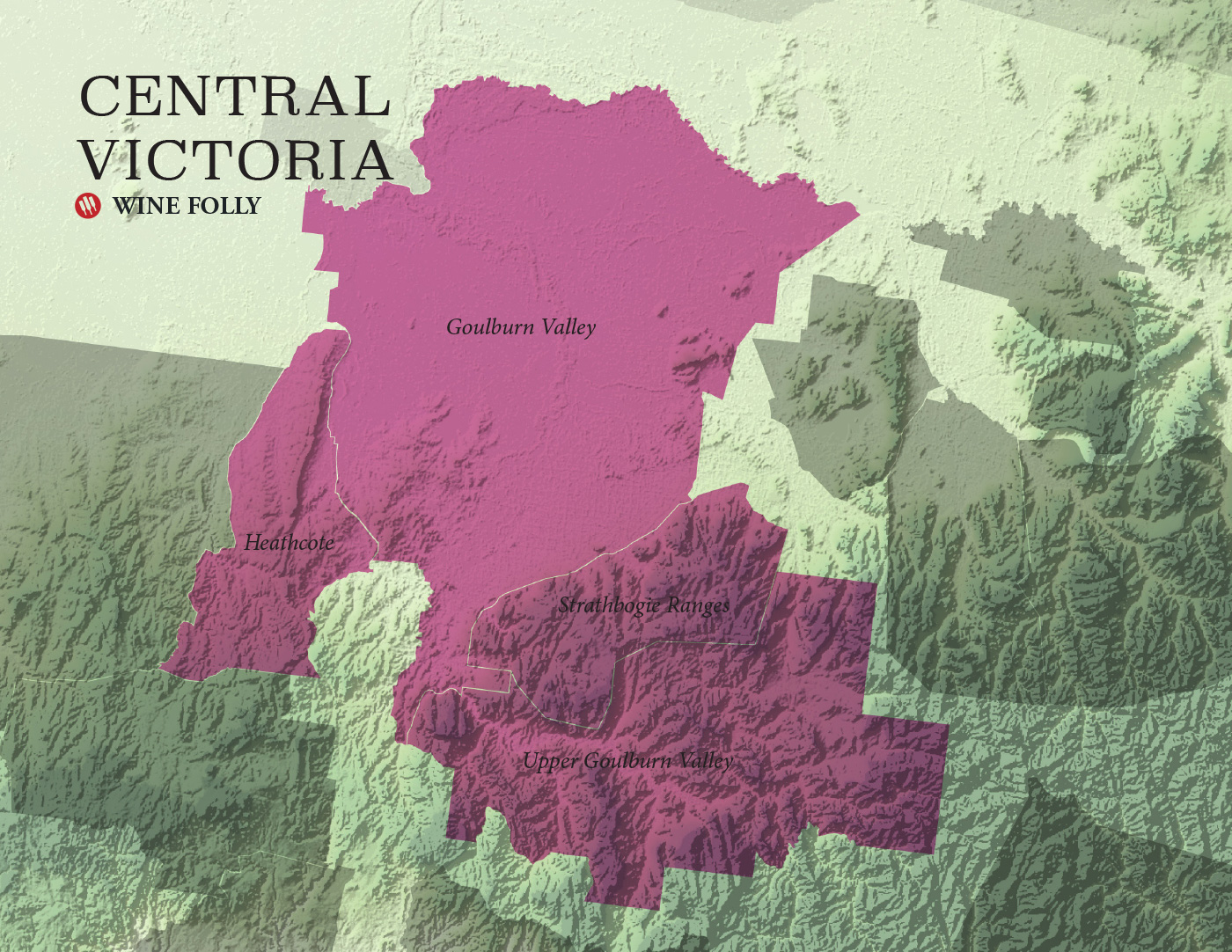
Central Victoria
Central Victoria serves up everything from beefy reds to racy, dry Rieslings, and some of the oldest Marsanne vines in Australia.
Sub-Regions of Note: Heathcote and Goulburn Valley/Nagambie Lakes
Heathcote
Heathcote’s ancient Cambrian basalt soils, warm summers, and cool winters yield big, juicy Shiraz with a savory, mineral backbone. The tannins are sturdy and brooding in their youth, supporting a hefty dose of alcohol (sometimes 15% or more), and often spend a fair lick of time in very high-quality French oak barrels. The results are harmoniously spicy, savory wines that deliver buckets of dense, dark fruit flavor. The kings of the Rhône Valley have also taken note; look out for collaborative efforts between top-notch producers in Heathcote and the likes of Michel Chapoutier.
Goulburn Valley / Nagambie Lakes
Consistent with the Rhône Valley influence, Marsanne, Roussanne, and Viognier steal the show 40 minutes northeast in the Goulburn Valley. Mid-19th-century Marsanne vines still produce zesty whites with green apple and lemon verbena notes that you can drink at a picnic or age for a decade. As a bonus, they’re often surprisingly affordable at around $20. You can also buy Shiraz from vines planted before Abraham Lincoln was elected, with incredibly dense, dark aromas of black cherries, plums, vanilla, tobacco, and dark chocolate.
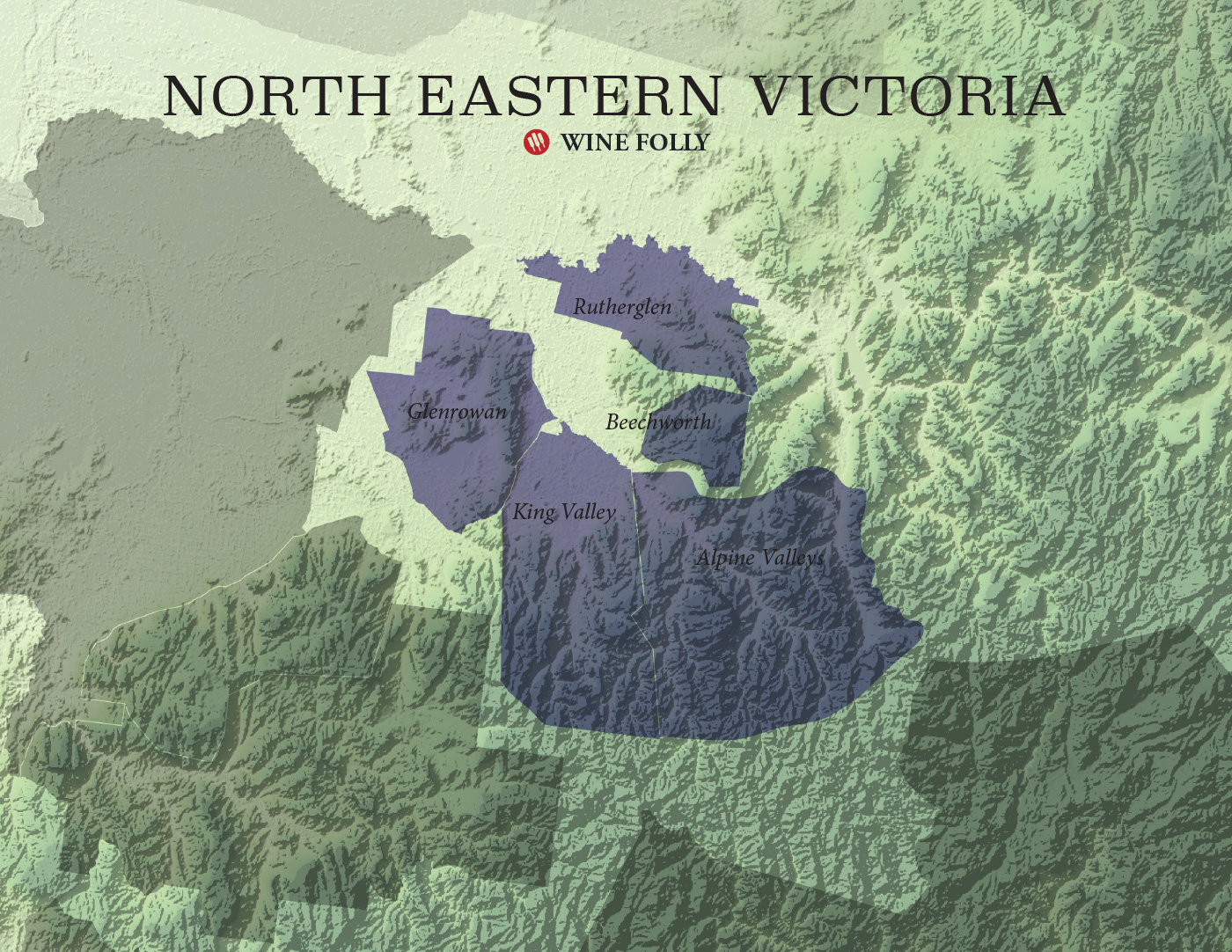
North Eastern Victoria
Light, dry white wines? Check. Fortified wines older than grandma? Check. Nebbiolo with a decidedly Italian accent? Check.
Sub-Regions of Note: Beechworth and Rutherglen
Beechworth
How does a wildly tannic, tobacco and smoke-laden, brooding, dark Nebbiolo sound? Italian perhaps? Nah, this is Beechworth. Beechworth churns out sturdy, oaky Chardonnays and bright, clean Petit Manseng that could have been plucked straight from Jurançon. Even Shiraz wines are light on their feet, with flavors of spice, pepper and ripe cherries. To keep everything interesting, there is also world-class Pinot Noir, made into wines that speak of delicacy, finesse and elegance, often with well-integrated, high-quality French oak barrels rounding out bright Bing cherry, raspberry, and mocha notes. That Nebbiolo, though, an Italian at heart, delivers a fair whack to an unsuspecting dinner guest if served before it reaches 15-20 years of age.
Rutherglen
Often vying for the “oldest family-owned winery” in Australia, the winegrowers of Rutherglen are famous for their fortified wines from Muscat. You can start a meal with a fortified Apera that has spent time under flor, recreating the famous Sherry wines of Jerez. Then, you can finish a meal with a Muscat from a solera that began in 1920.
The new kids on the block are also crafting dry white wines from Ugni Blanc and others that are light and zesty with flavors of apple, lemon verbena, and wet stone minerality.