

Climate change and shifting consumer values are changing wine. It’s not only about fruit flavors or oak aging. People want to know more about sustainable wine and origin, and are asking: How was this vineyard cared for? Were the people respected? What impact does this wine have on the planet?
But terms like sustainable, green, organic, clean, biodynamic, and regenerative are sometimes met with a blank stare of confusion, particularly with greenwashing marketing.
Some labels represent third-party verified practices, while others are marketing terms that may not guarantee measurable environmental or social outcomes.
This article clarifies those terms and explains why regenerative wine is becoming an increasingly important part of the conversation.
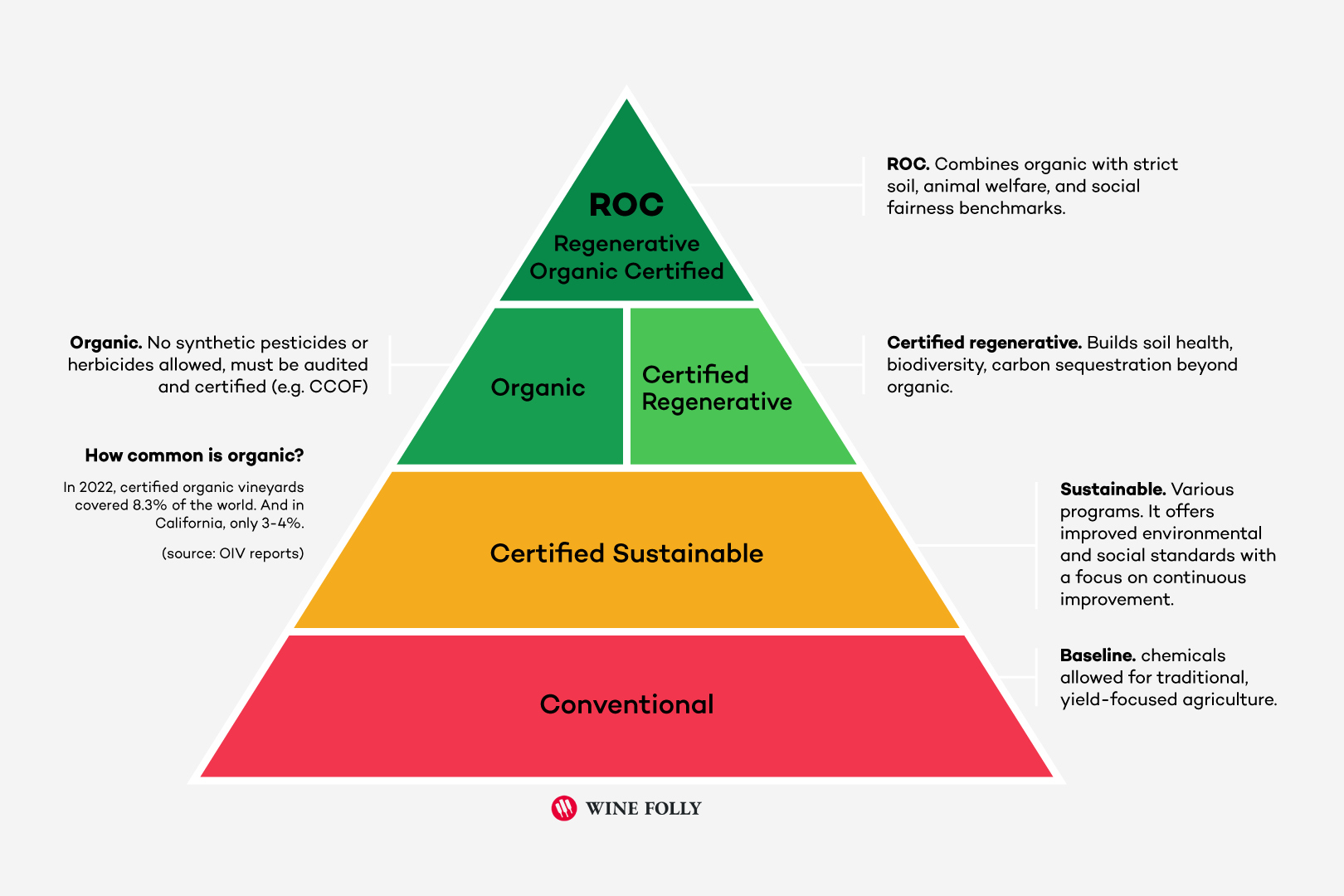
The Sustainability Ladder
Think of wine farming as a ladder:
Conventional → Certified Sustainable → Organic → Regenerative → Regenerative Organic Certified
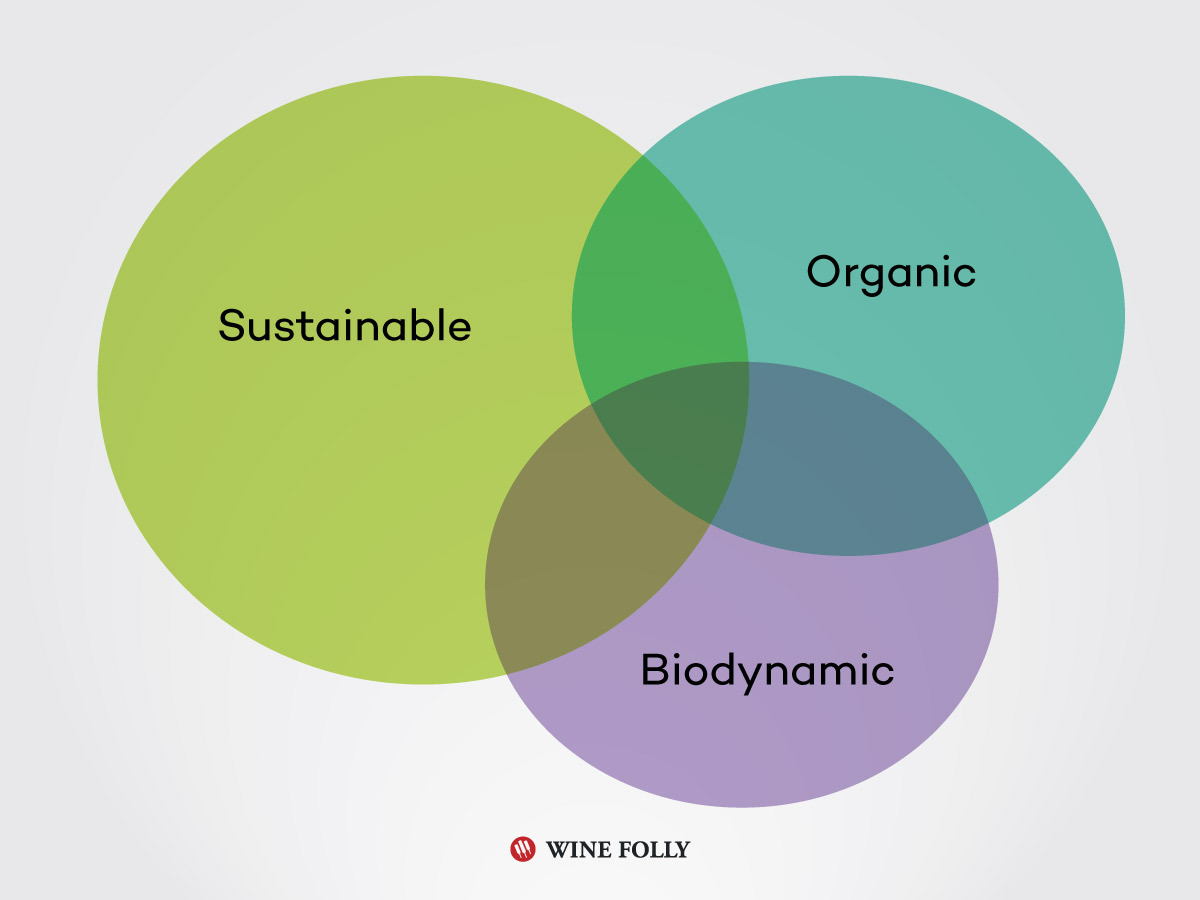
Biodynamic runs alongside, overlapping with organic and regenerative, but with its own philosophy.
Each step up the ladder represents more rigorous attention to:
- The environment
- Vineyard workers and communities
- Long-term viability of the land
This hierarchy explains how sustainability is a progression, not just a logo on a label.
What Does “Conventional” Viticulture Mean?
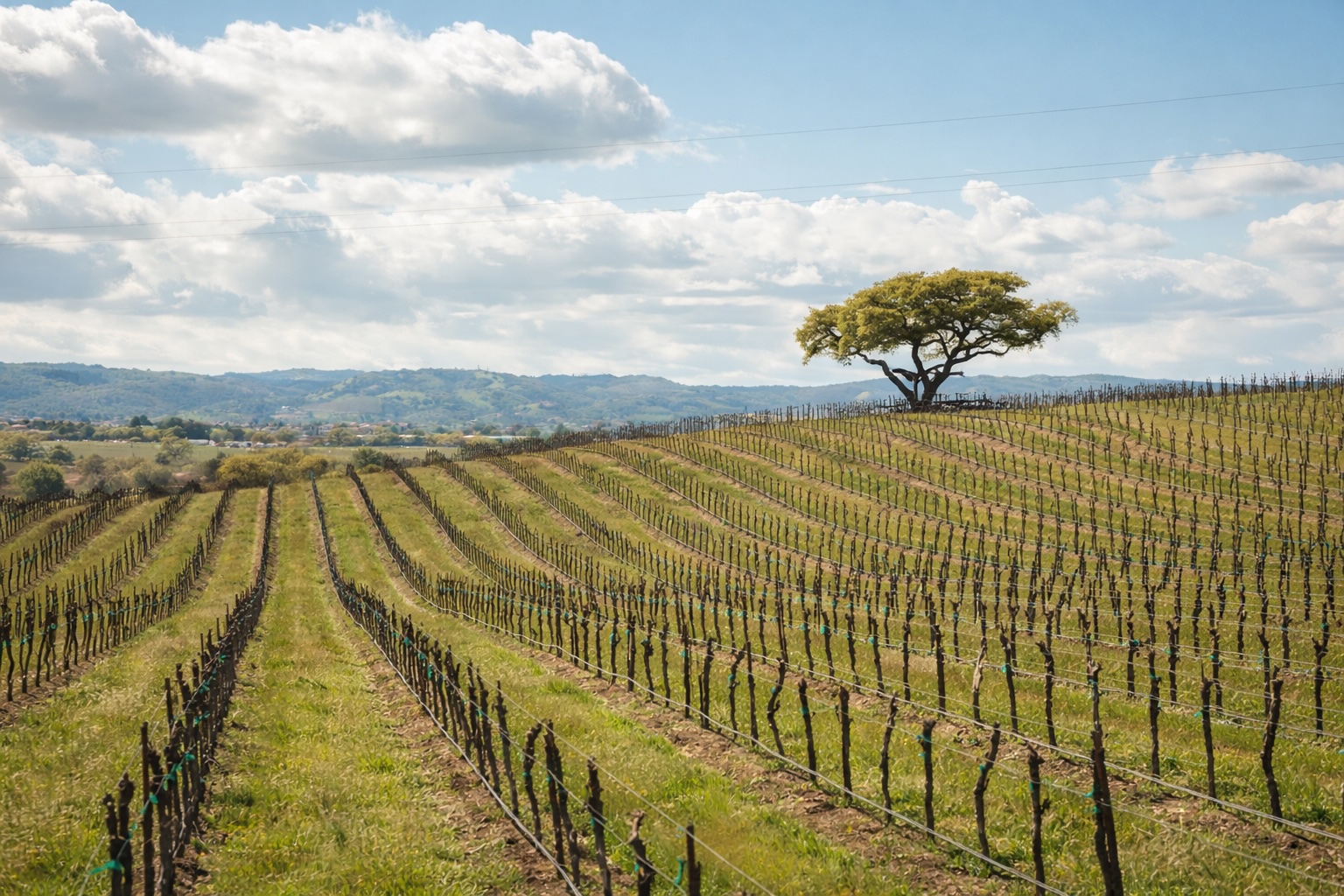
Conventional viticulture refers to the most common approach to growing wine grapes worldwide. This model typically uses synthetic pesticides, herbicides, and fungicides to control weeds and disease and often deploys mechanization to maximize efficiency and yield.
Conventional doesn’t inherently equate to poor quality wine; many world-class wines are made from conventionally farmed grapes. However, the vineyard’s ecological footprint is generally higher, and soil health is rarely the primary focus.
Sustainable Wine
Sustainable wine programs came first as a practical way to do less harm. They don’t all look the same, but most address:
- Water and energy use
- Waste reduction
- Soil and ecosystem stewardship
- Social responsibility
Unlike organic or regenerative standards, many sustainable programs allow synthetic inputs, but they aim to manage them responsibly. Participation ranges from voluntary self-assessment to third-party audited systems.
Examples of major sustainable wine programs include:
- Certified California Sustainable Winegrowing (CCSW) — third-party audited, tracks water, energy, and nitrogen use.
- Sustainable Winegrowing New Zealand — covers biodiversity, waste, chemical use, and energy efficiency.
- Sustainable Winegrowing Australia (SWA) — national program aligned with UN Sustainable Development Goals.
Sustainable certification gives assurance that growers are measuring and improving environmental and social outcomes, even if the wine isn’t organic.
Organic Wine
Organic wine removes most synthetic chemicals. Organic vineyards rely on natural alternatives for weed, pest, and disease management, and wine production must meet strict additive rules.
Globally, organic vineyards have been expanding:
- In 2022, over 1.3 million acres (560,000 ha) of vineyards were certified organic, representing about 8.3% of global vineyard area (that’s up from 3.2% in 2021).
Organic vineyards are concentrated largely in Europe, although other countries are rapidly growing their organic acreage. As of 2026, only about 3–4% of U.S. vineyards are organic.
There are nuances to organic labeling:
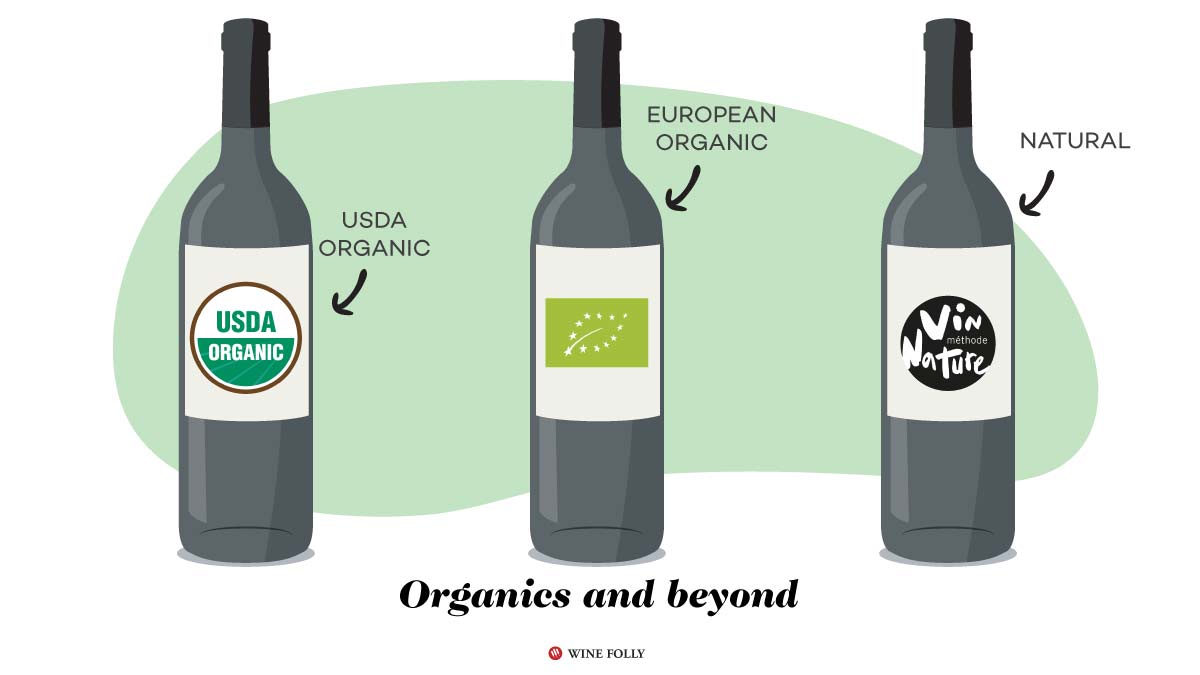
- Organic grapes mean the vineyard is certified organic.
- Organic wine can require that both vineyard and winery processing adhere to organic standards, including restrictions on additives and processing materials.
Organic certification focuses on what cannot be used, it sets a clear minimum standard. But note: Organic ≠ regenerative. A vineyard can be organic and still degrade soil or rely on monoculture. Organic protects the crop, but regenerative builds the ecosystem.
Regenerative Wine
Regenerative farming emphasizes outcomes rather than just input restrictions.
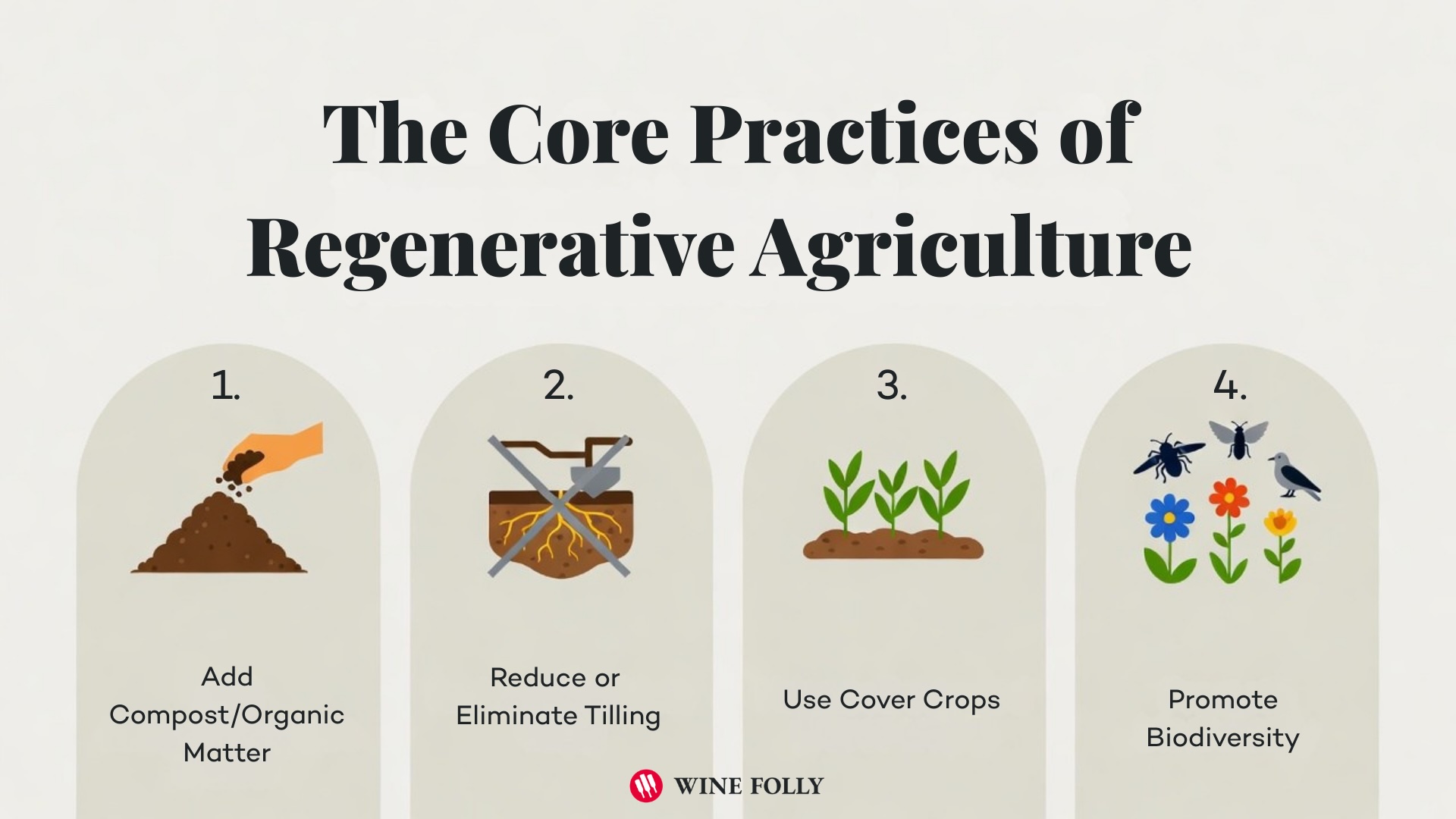
Instead of prohibiting certain substances, regenerative practices aim to improve soil biology, increase biodiversity, enhance water retention, and build resilience to climate extremes.
Key regenerative practices often include:
- Reducing or eliminating tillage
- Maintaining continuous soil cover with cover crops
- Adding high levels of organic matter through compost
- Encouraging diverse plant and animal life on the land
These practices help make the vineyard ecosystem more robust, which can help vines cope better with heat swings and drought variability. They also shift the focus from simply sustaining conditions to actively rebuilding the function and health of the land.
Regenerative Organic Certification
To make regenerative practices more transparent, the Regenerative Organic Certified (ROC) label exists. ROC builds on organic rules and adds audited requirements around:
- Soil health – measurable improvements, composting, cover crops
- Animal welfare – humane treatment, access to pasture
- Social fairness – fair wages, safe working conditions
ROC is one of the most rigorous certifications for vineyards practicing regenerative agriculture, though adoption is still emerging.
Think of it as organic + audited regenerative outcomes + equity standards.
Biodynamic Wine
Biodynamic farming, rooted in early 20th-century philosophy, goes beyond organic restrictions and embeds a holistic view of the farm as a self-contained organism.
Certified biodynamic vineyards use special preparations and may follow lunar calendars for key activities. While biodynamics often overlap with regenerative goals, particularly regarding soil life and biodiversity, biodynamic standards are distinct and philosophically oriented.
International certifications like Demeter and Biodyvin verify adherence to biodynamic practices.
Because biodynamic farms often practice regenerative techniques, the categories overlap in practice even if their frameworks differ.

Certification vs. Claims: Decoding Label
As more terms appear on labels, it’s critical to distinguish certifications from marketing claims.
When evaluating a wine label, ask:
- Is there a logo?
- Who is the certifier?
- What does it cover? (Vineyard only? Winery? Both?)
- Is there third-party auditing?
Words like “sustainable,” “eco,” or “green practices” may reflect sincere efforts, but without an audited certifier, they aren’t proof of specific practices.
Regenerative wine, organic wine, and certified sustainable wine all exist on a continuum of practice and accountability, and clear labels help consumers make informed choices.
What This Means When Wine Shopping
No category guarantees a “better tasting” wine. Taste depends on terroir, winemaking, and stylistic decisions. However, each level of sustainable wine reflects a different way of stewarding the land and community.
Here’s a simple breakdown:
- Sustainable wine focuses on responsible resource use and social equity.
- Organic wine eliminates most synthetic inputs, grounding itself in regulatory standards.
- Regenerative wine prioritizes ecosystem improvement, focusing on soil health and resilience.
- Regenerative Organic Certification combines organic standards with audited regenerative outcomes.
Next time you shop for wine, ask what the vineyard is doing, not just what it’s avoiding.
By understanding the ladder from conventional to regenerative, you can choose wines that align with your values and enjoy them knowing your glass supports something good for the earth.