

Explore the intricacies of Champagne’s Côte des Bar region in the Aube, which has exploded in growth over the past couple of decades. If you’re just dipping your toes into Champagne, check out A Guide to Finding Great Champagne.
Champagne has moved well beyond formal celebrations, showing up everywhere from paired with pizza to casual picnics. The Côte des Bar is very much the underdog of Champagne, with a tendency to rebel against the system.
Côte des Bar has become a hot spot of untapped potential, particularly for Pinot Noir. Let’s explore the landscape, grapes, quirky specificity, and producers that make this Champagne region so darn awesome.
Côte des Bar Champagne Guide
Most Champagne regions are within the Marne département (by Reims and Épernay). The Côte des Bar stands as the only major wine region in the Aube, southeast of the city of Troyes. It takes less than two hours to drive here (from Reims), but the landscape is nothing like central Champagne. Vineyards are leisurely interspersed with forests, farms, and streams. It’s unlike the densely-planted Montagne de Reims, Côte des Blancs, and Vallée de la Marne. In fact, most vineyard owners are not full-time wine growers.
For decades, most growers sold their grapes directly to large Champagne houses rather than bottling their own wines. The 21st century saw a few risk-takers in the Côte des Bar start making their own wines and push towards a culture of artisanal, experimental, terroir-driven Champagne. The vineyard area has expanded significantly since 2000, and today the Côte des Bar accounts for nearly a quarter of Champagne’s total vineyard surface.
Pinot Noir FTW
Since the Côte des Bar is part of Champagne, the grapes are easy to remember. Champagne regulations permit growers to plant Pinot Noir, Chardonnay, and Pinot Meunier, along with the more obscure supplementary varieties like Pinot Blanc, Pinot Gris, Arbanne, and Petit Meslier. But Pinot Noir dominates the landscape, accounting for around 86 percent of the area’s vines.
Growers are steadily increasing Chardonnay plantings, but still sit around 10%, and Pinot Meunier accounts for a small share of plantings, roughly 3–5% of vineyards. Interestingly, Pinot Blanc has a long history in the Côte des Bar, and some producers are making single-varietal Pinot Blanc Champagne wines!
Climate and Soils
Champagne is known for its distinctive chalky-limestone soils, which result from its location just outside the center of the Paris Basin. But the Côte des Bar is located just on the edge of this strip of soil, where chalk meets clay. Geologists call this Kimmeridgian soil, and it may sound familiar – it’s the same dirt of Chablis! In fact, the Côte des Bar is about a half-hour’s drive closer to Chablis than to Reims. The Aube also contains smaller pockets of younger Portlandian soils — also present in parts of Chablis — though they are far less dominant.
“So we’re wondering… why aren’t they planting more Chardonnay?”
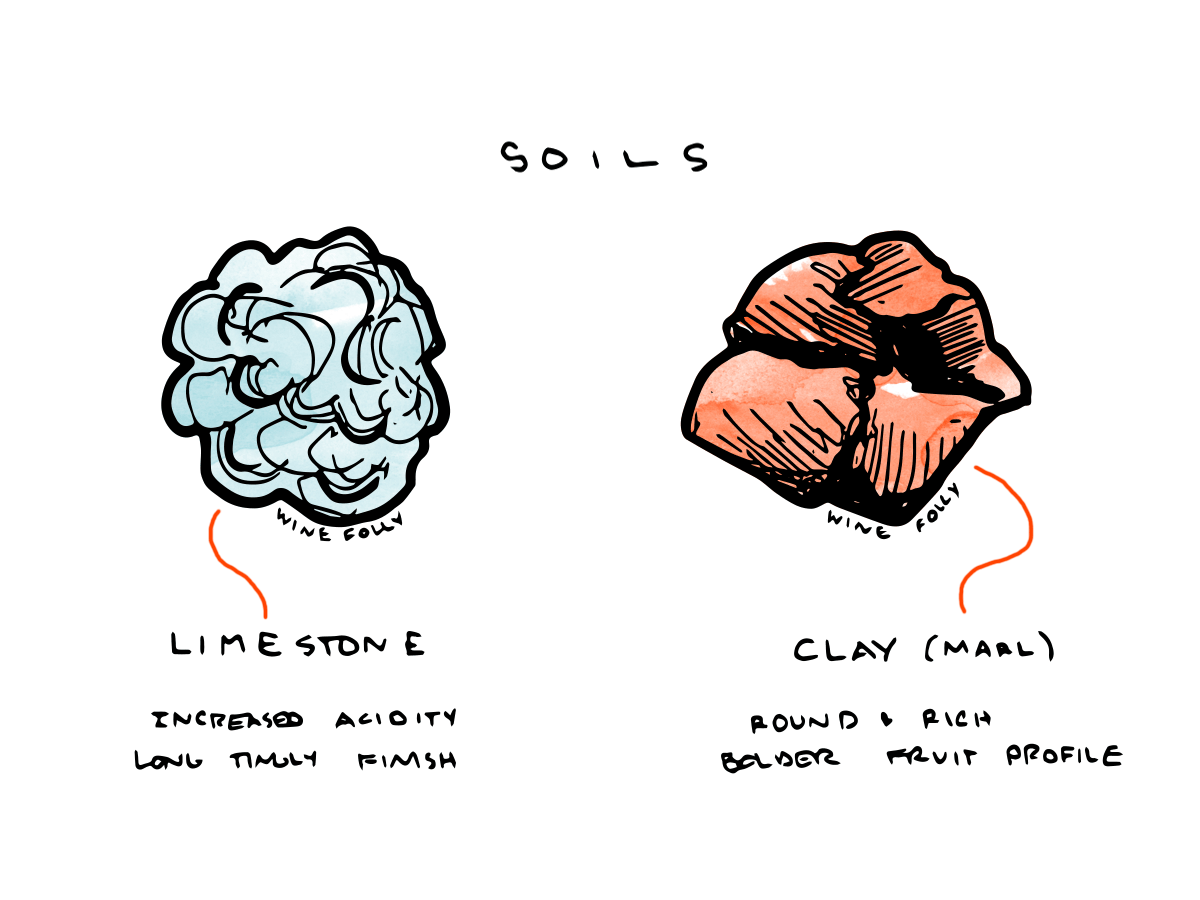
Since Kimmeridgian soil is a marly blend of limestone and clay, it does two things to the grapes. The chalky soils maintain acidity, and the clay-marl encourages round, rich structure and boisterous fruit flavors. Together, these soils and slightly warmer temperatures give Côte des Bar Champagnes a broader, softer profile (though make no mistake – this is still a marginal climate).
A Little History
The Côte des Bar has a long history of growing and supplying grapes to Champagne houses in the north for purchase. Champagne’s major houses treated the Côte des Bar as a second-class region for decades. In fact, the large producers in the Marne département pushed to exclude the Aube from the official classification of the Champagne region in 1908, leading Côte des Bar growers to riot!
Though the “powers that be” relented in 1911, regions in the Aube were classified as Champagne deuxième zone, or “second Champagne zone,” until 1927. Perhaps this century-old chip on the shoulder is a reason why Côte des Bar producers are so willing to buck tradition?
The Regions of Côte des Bar
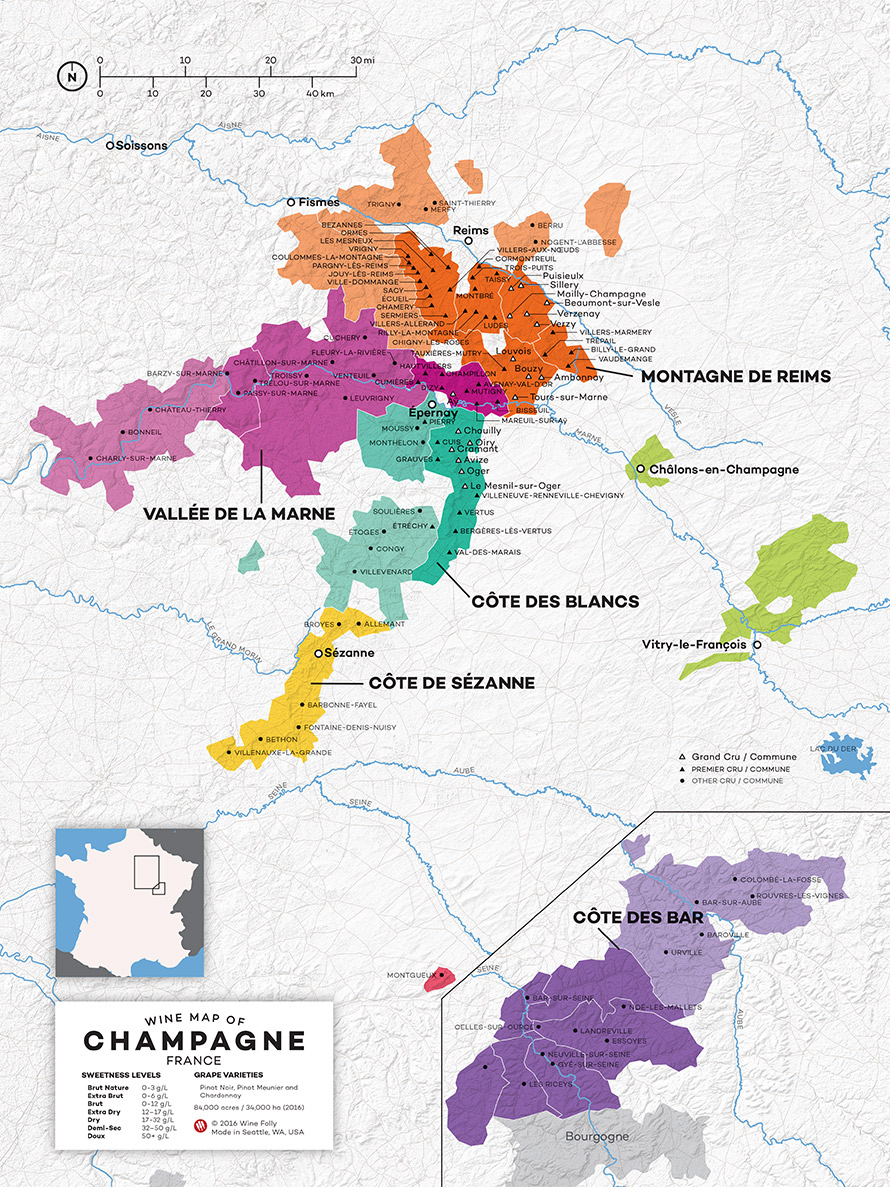
There are 19,870 acres and 63 villages in the Côte des Bar. They aren’t young, exactly, but they are for producing wine, rather than just growing grapes. Thus, the differences between the area’s sub-regions are still up for interpretation. That said, this specific Champagne region — the Côte des Bar — has a few distinct areas to know.
Barséquanais
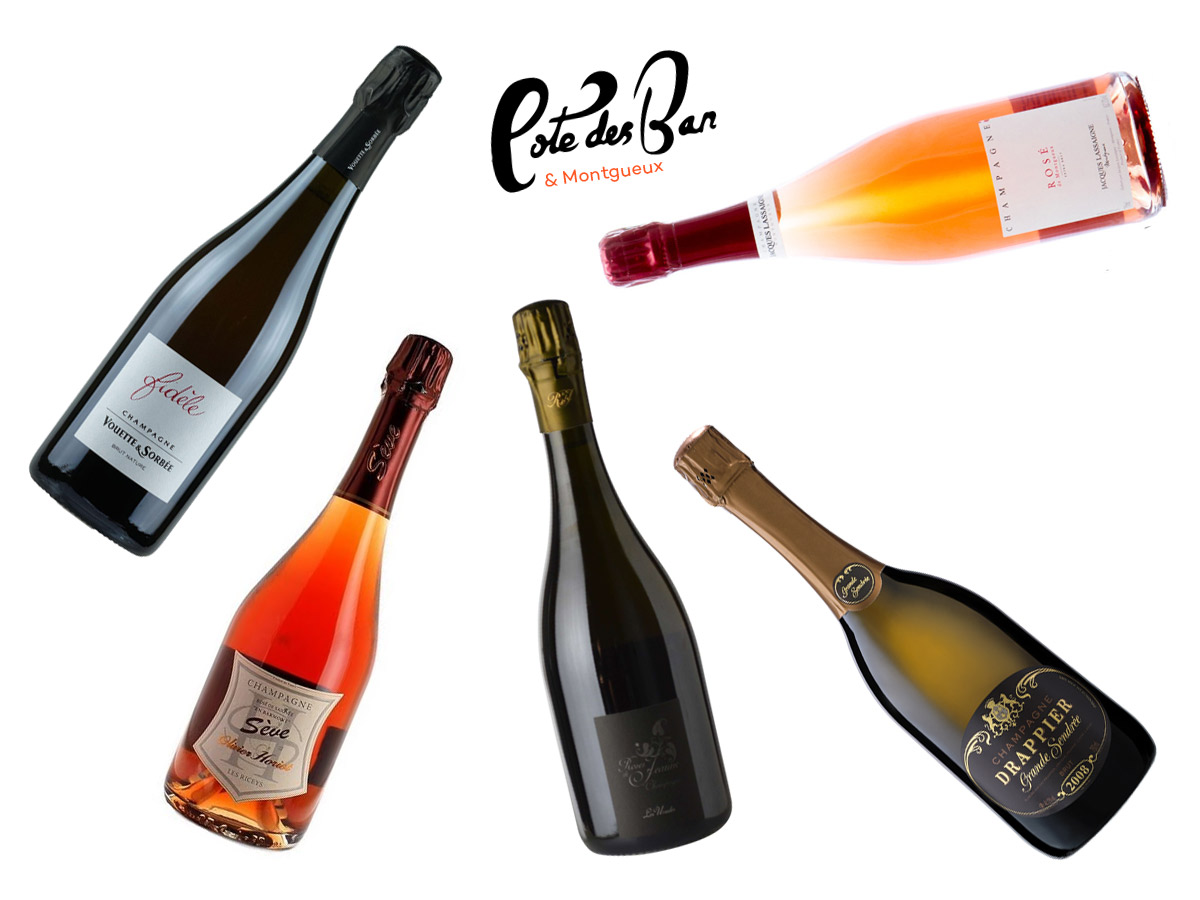
Top Producers: Cédric Bouchard (Roses de Jeanne), Marie-Courtin, and Fleury.
In the southwest portion of the Côte des Bar, the 33 villages of the Barséquanais center around the town of Bar-sur-Seine. This area concentrates many of the Côte des Bar’s most influential producers. Vineyards are primarily Pinot Noir.
Bar-sur-Aubois
Top Producers: Drappier, Nathalie Falmet, Christian Etienne
This northeast area of the Côte des Bar has fewer growers but is home to the region’s long-standing Champagne house, Drappier. Thirty-one villages cluster near the central town of Bar-sur-Aube. Pinot Noir dominates here, though a tiny bit of white Arbanne is here too.
Rosé des Riceys
Top Producers: Olivier Horiot
While this area surrounding Barséquanais’ Les Riceys village is small, it has its own AOP – one of only three in the entirety of Champagne. The Rosé des Riceys AOP produces a rare, still red wine (surprise!) made from 100% Pinot Noir. Most are pale, tart, and light-colored. This is not your typical Pinot Noir!
Montgueux
Top Producers: Jacques Lassaigne, Jean Velut
Okay, admittedly, Montgueux sits just outside the formal boundaries of the Champagne region. So, it’s not technically in Côte des Bar, but it shares the region’s energy and innovation, and it’s the only other significant Champagne-growing region in the Aube. Montgueux is an oddity. It’s a hill of chalk surrounded by flat lands unsuitable for grape growing. Unlike the rest of the Aube, Montgueux specializes in ripe, rich, high-quality Chardonnay grown on south-facing slopes. (Aha! There’s the Chardonnay!)

Winemaking Techniques
Beyond the soil and climate differences of the Côte des Bar, there is a distinct mindset when it comes to creating these wines. That mindset boils down to specificity. Côte des Bar winemakers often focus on the singular attributes of their Champagnes, rather than blending them into a whole.
Single Vigneron
While a few Champagne houses set up shop in the Côte des Bar over a century ago, the region’s recent boom has been driven by grower-producers. A single vigneron produces wine from estate-owned grapes rather than purchased grapes, thereby exerting greater control over fruit quality.
Single Vintage
Many Côte des Bar houses choose to craft their entry-level Champagnes as single vintage cuvées. This is rare in Champagne. Most blend vintages to create consistency. But here, producers embrace the differences from vintage to vintage. Just so you know, wines can’t be labeled by vintage unless they are aged in bottle for three years. Because vintage Champagne requires extended bottle aging, some producers choose to disclose harvest or disgorgement details on the back label, often using ‘R’ to indicate the disgorgement year rather than the vintage.
Why We’re Drinking Côte des Bar Right Now
There’s a reason why Champagne lovers clamor for wines from the Côte des Bar. Once cast aside as second-class, only fit for purchased grapes, the producers of the Côte des Bar have cultivated a winemaking culture of experimentation and innovation. While this is happening across Champagne, it is especially concentrated in the Côte des Bar because young, forward-thinking producers can actually afford to purchase land and grapes.
Like all good things, it probably won’t last; it’s only a matter of time before demand and, therefore, land prices rise. For now, there are certainly some pricy Côte des Bar Champagnes, driven by small production and low profit margins, but some excellent, interesting bottles can be found for under $50. Jump into this lesser-known Champagne region now and join the excitement.