

Aromatic white wines burst with dominant floral aromas from naturally occurring terpene compounds in the grape. Love jasmine, rose, and orange blossom? Start here.
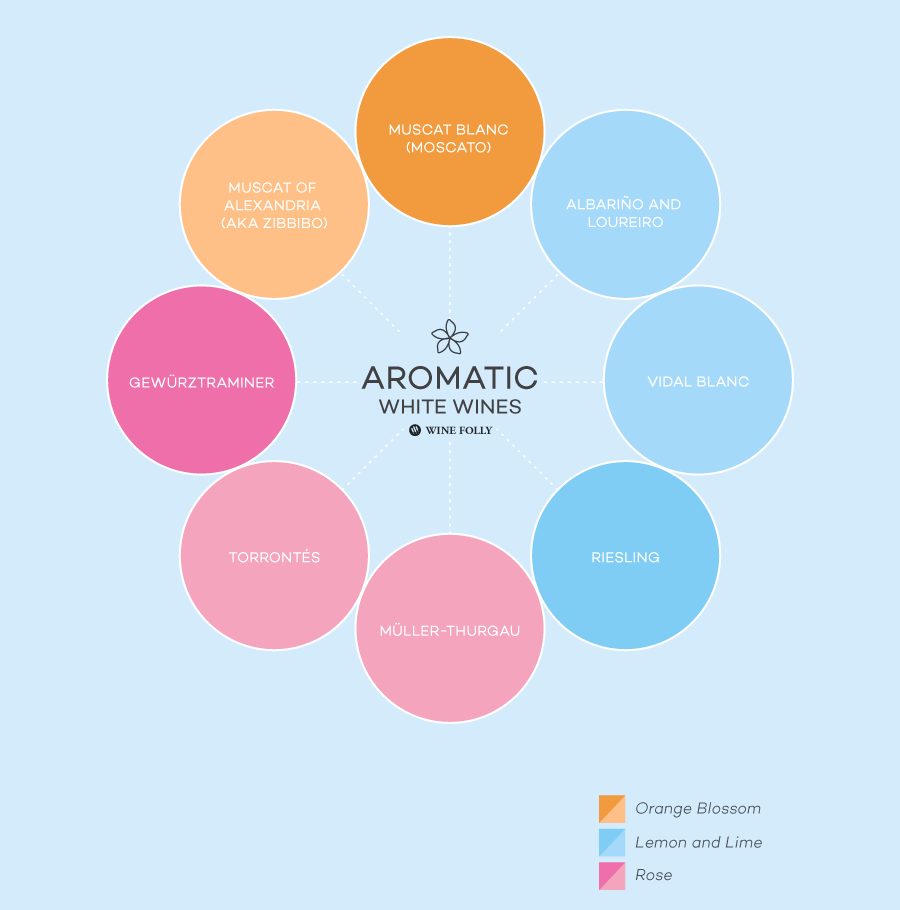
Aromatic White Wines
A short list of aromatic white wine varieties and their dominant aromas:
- Albariño and Loureiro: Lime Blossom, Lemon, Grapefruit, and Melon
- Riesling: Jasmine, Lime, Honey, and Green Apple
- Gewürztraminer: Lychee, Rose, Pink Grapefruit, and Tangerine
- Vidal Blanc: Jasmine, Melon, Grapefruit, and Pineapple
- Muscat Blanc (aka Moscato): Orange Blossom, Mandarin Orange, Sweet Pear, and Meyer Lemon
- Müller-Thurgau: Rose Water, White Peach, Geranium, and Pear
- Muscat of Alexandria (aka Zibbibo): Orange Blossom, Rose, Tangerine, and Peach
- Torrontés: Rose Petal, Geranium, Lemon Zest, and Peach
- Cserszegi Fűszeres: (chair-seg-ee foo-sar-resh) A Hungarian variety. Rose, Elderflower, Peppermint, and White Peach
With aromatic wines, aroma leads the experience. A single glass of Gewürztraminer can evolve in the glass for over an hour.
Styles range from bone-dry to lusciously sweet. For this reason, they’re highly desirable to sensitive palates, including supertasters.
In case you were wondering, the styles that are almost always made in dry style are Torrontés and Albariño.

Serving Aromatic Wines
Like most white wines, aromatic versions can be served chilled in a white wine glass. Serve higher-quality examples slightly warmer to unlock more aroma. Some tasters prefer wider bowls to concentrate aromatics.

Pairing Food with Aromatic Wines
Aromatic white wines are flavor amplifiers when matched with food. For example, the sweet, vanilla-like flavors in coconut are heightened when matched with a wine like Gewürztraminer.
Thus, it’s fun to use this style of wine more like an ingredient or embellishment to a dish. They shine with Southeast Asian and Indian cuisine.
Despite their intense aromatics, many examples are lighter on the palate, so opt for lighter meats, poultry, or seafood.
Science Behind Aromatic Wines
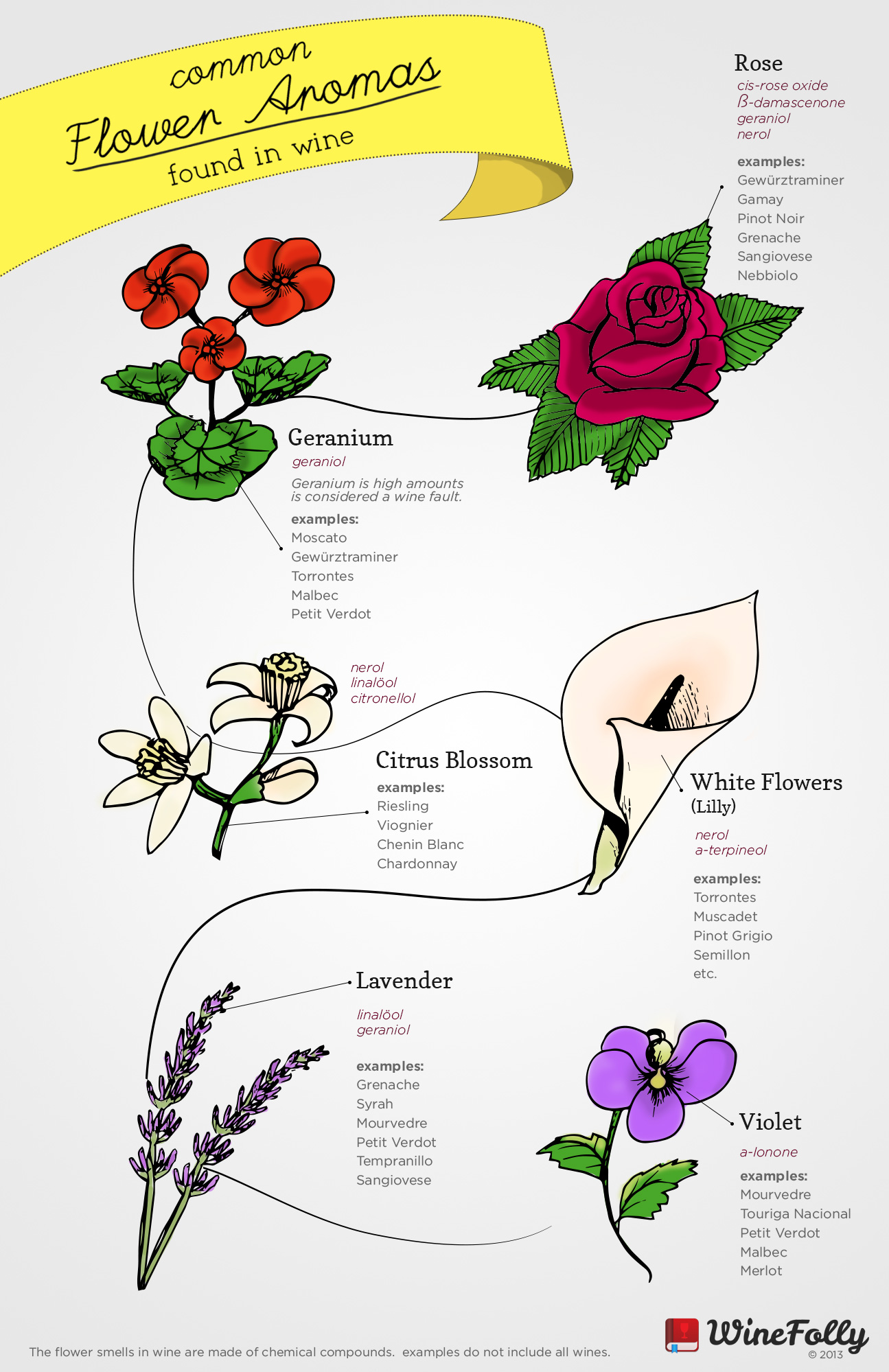
While many primary wine styles are characterized more by winemaking tradition (e.g. some oak-aged full-bodied white wines), scientists classify aromatic varieties by their high terpene content.
Aromatic wines are unique because they have higher levels of an aroma compound class called terpenes (not turpentine), which include the very same aromas found in flowers. Aromatic white wines have particularly high levels of a certain subgroup of terpenes called monoterpenes (including the compound linalool).
Monoterpenes drive many of the floral aromas that you detect, such as rose, geranium, orange flower, and more. So, the next time you smell a wine, and it smells like roses, it might be monoterpenes at work.