

Also known as: Veltlínské Zelené, Zöldveltelini
Table of Contents
Primary Flavors
- Starfruit
- Gooseberry
- Green Bean
- White Pepper
- Crushed Gravel
Taste Profile
Grüner Veltliner is known for its spicy, peppery aromas and lean style, but it can also produce full-bodied, rich styles. It all depends on how and where it grows.
On the nose, Grüner Veltliner delivers lime, lemon, and grapefruit. There is also a green, herbal character alongside the variety’s hallmark white pepper note. In warmer parts of Austria, you’ll find riper fruit flavors such as peach and nectarine.
On the palate, you can find a signature vein of very high acidity. Most wines are bone dry, though some have a hint of residual sugar that’s rarely noticeable due to the acidity. Styles range from light and zesty to full-bodied and rich, depending on the climate. Most wines see no new oak, so expect that vein of freshness in most examples.
How to Serve Grüner Veltliner Wine
Grüner Veltliner should be served well chilled if it’s a zesty, youthful style. However, the more full-bodied, age-worthy wines can be served slightly warmer. Serve in a standard white wine glass. There is no need to decant unless you’ve got an older wine. In that case, brief decanting can help it open.

SERVE
45–65°F / 7-12°C
GLASS TYPE
White
DECANT
No
CELLAR
10+ Years
Grüner Veltliner Food Pairing
The acidity and spice in Grüner Veltliner match perfectly with creamy or fatty dishes. The traditional pairing of Wiener Schnitzel is perfect, but Tonkatsu or Ramen would be great, too. Aged versions are great with hard mountain cheeses such as Gruyère or Appenzeller.
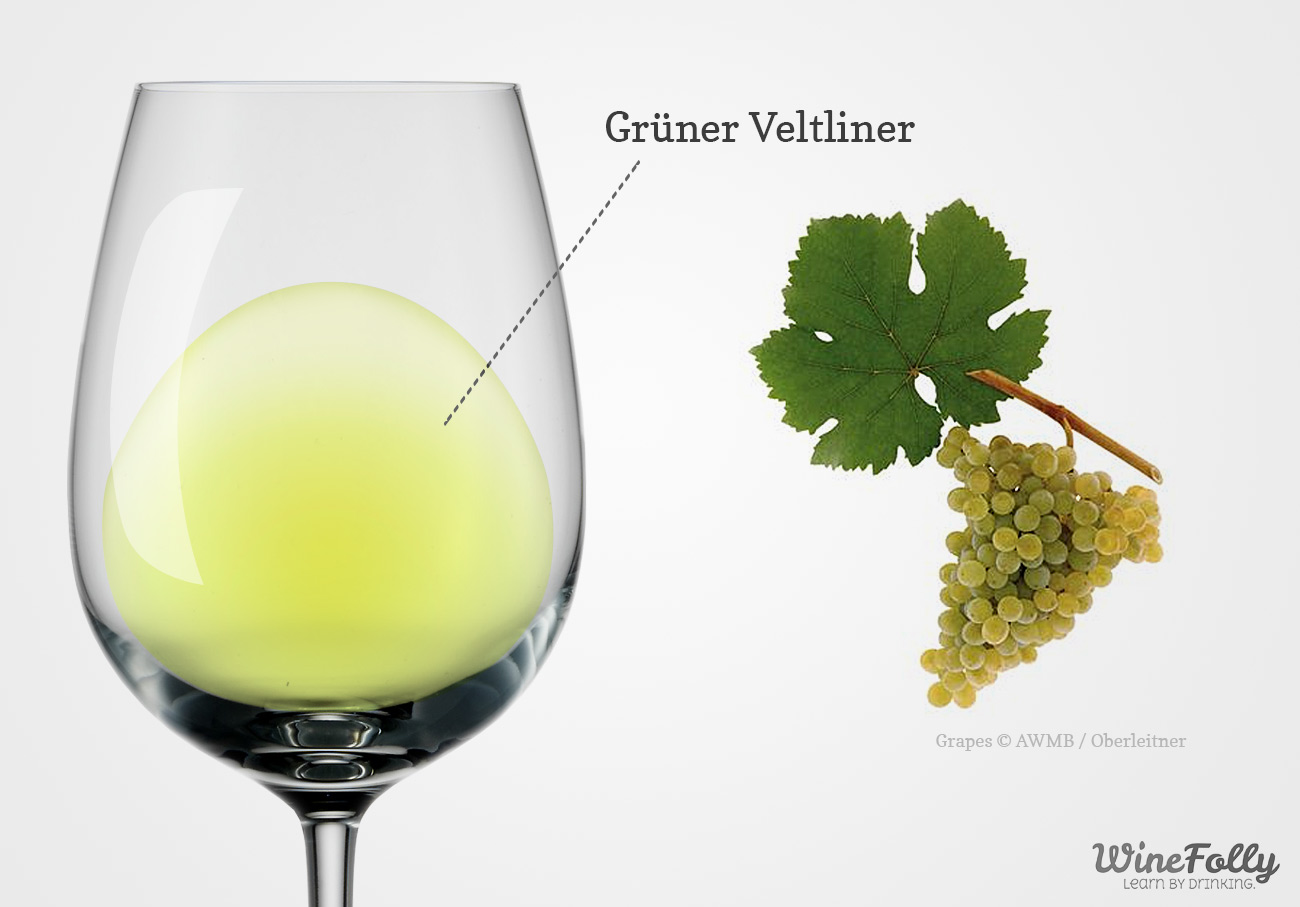
5 Fun Facts About Grüner Veltliner
- The peppery aroma in Grüner Veltliner is linked to rotundone — the same compound responsible for Syrah’s peppery character.
- Grüner Veltliner translates to “Green Veltliner.” The name may reference the Valtellina (formerly Veltlin) region in northern Italy, though the connection is uncertain.
- Roughly one-third of Austria’s vineyards are planted to Grüner Veltliner.
- Grüner Veltliner is not related to Roter Veltliner or Frühroter Veltliner.
- Grüner Veltliner likely originated in eastern Austria.
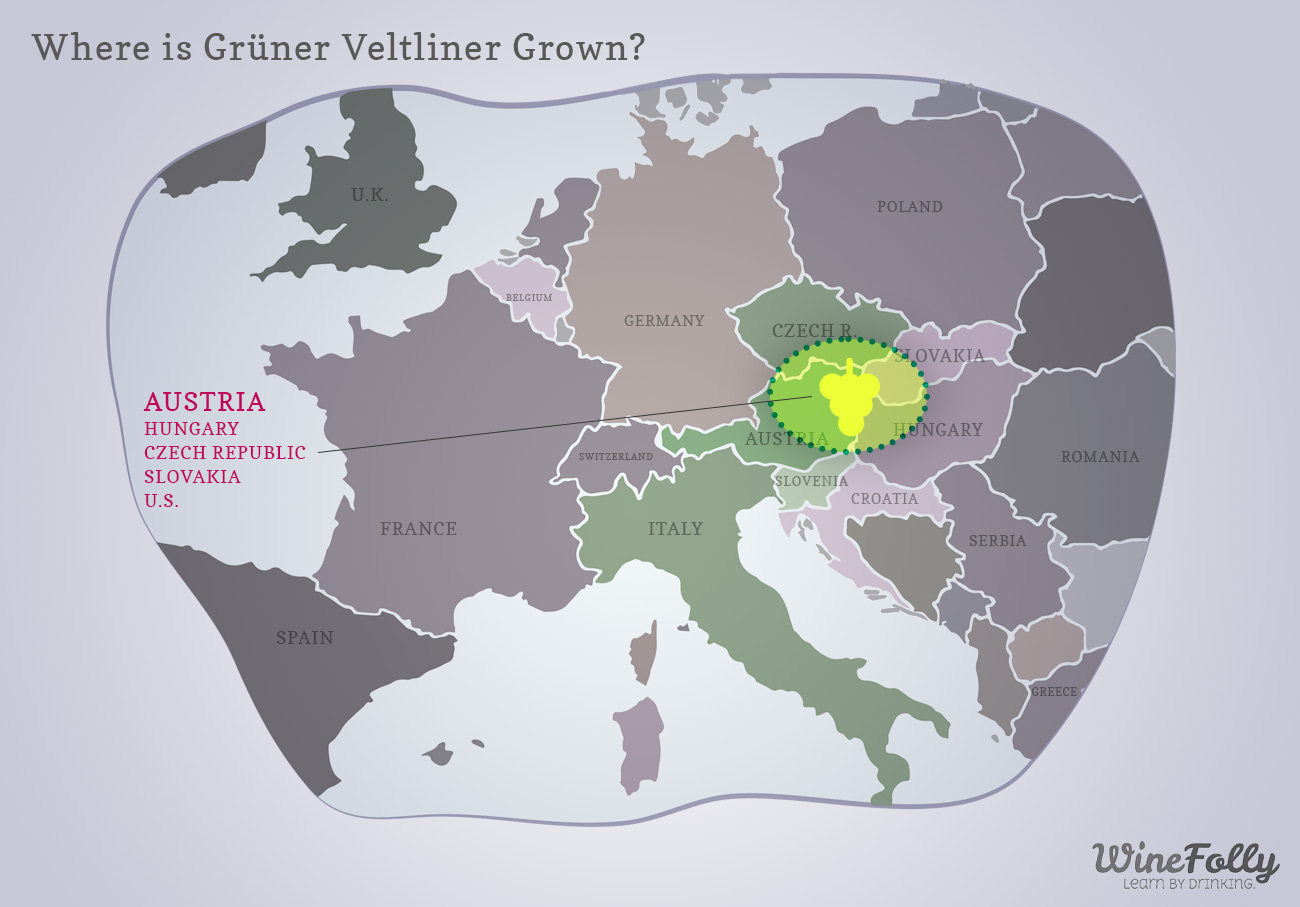
Where it Grows
75% of all Grüner Veltliner in the world is planted in Austria. Over 90% of those grow in one region of Austria, Niederösterreich.
- Austria: 35,524 acres (14,376 hectares)
- Slovakia: 4,020 acres (1,627 hectares)
- Czechia: 3,800 acres (1,538 hectares)
- USA: 148 acres (60 hectares)
Total Vineyard Area – 47,244 acres (19,119 hectares) (Source: University of Adelaide, 2021)
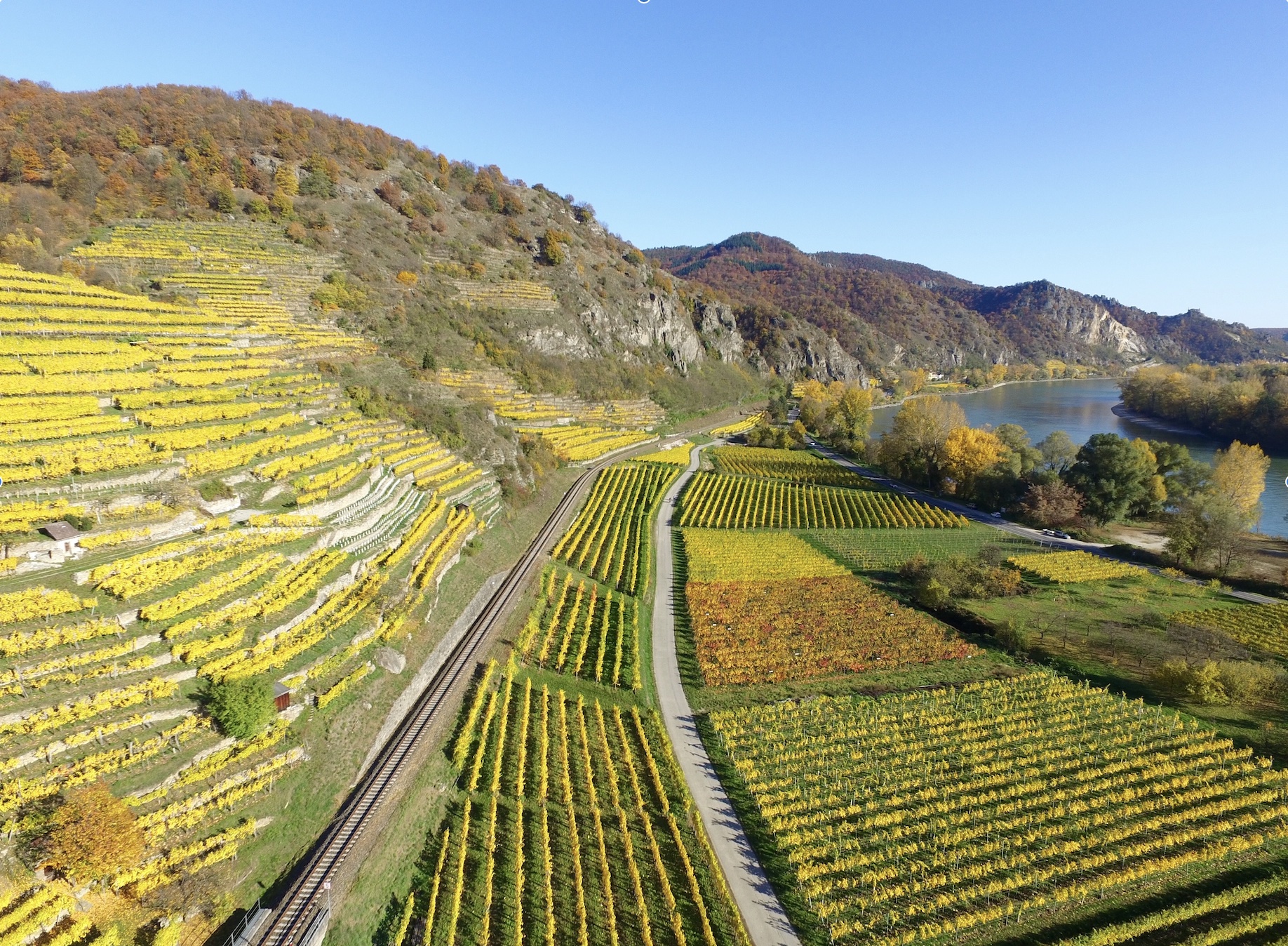
Austria
What to expect: From light-bodied, zesty dry wines to fuller-bodied, rich and age-worthy styles, Austria is the home of Grüner Veltliner with a mosaic of styles to discover.
Check out the three main regions in Austria that produce Grüner Veltliner and what to expect from each.
Wachau: Grüner Veltliner can be some of Austria’s most powerful and age-worthy. Thanks to the steeply terraced slopes and the gneiss soils, you’ll find ripe peach and flint notes in the dry wines, many of which are perfect for aging. For the best examples, look for Smaragd on the label. To learn more, check out our deep dive into the Wachau.
Weinviertel: Grüner Veltliner is among the spiciest expressions of the variety, and is generally made in an easy-drinking, light-bodied, dry style. Check out this region if you’re looking for that peppery kick alongside arugula and lime notes.
Kamptal: Grüner Veltliner ranges from dry and spritzy like in the Weinviertel to more full-bodied as in the Wachau. For the best examples, look for Reserve on the label.

In-Depth Knowledge
Grüner Veltliner’s distinct characteristics can be attributed to its genetic makeup, with parent varieties Traminer and St. Georgener-Rebe contributing to its unique expression. The grape’s unique white pepper aroma comes from rotundone, a sesquiterpene present in its berry skins. Grüner Veltliner’s acidity is due to high concentrations of L- and D-tartaric acid isomers, contributing to its structure and food-pairing versatility.
Why Such A Range of Styles?
Grüner Veltliner comes in various styles in Austria, from simple and easy-drinking to fuller-bodied and age-worthy. Let’s look at what happens in the vineyard and winery to create this range of styles.
In the vineyard:
In terms of viticulture, Grüner Veltliner thrives in cooler climates. Optimal grape development requires careful canopy management, such as leaf removal and shoot thinning. Grüner Veltliner wines can become dilute and unappealing without careful canopy and yield management. Producers who practice careful canopy management produce higher-quality wines.
Grüner Veltliner prefers well-draining soils, such as loess and primary rock, which influence texture and perceived mineral character. Areas such as Wachau, Kamptal, and Kremstal feature a mix of loess and primary rock soils, including gneiss, granite, and other ancient formations.
In the winery:
In winemaking, winemakers achieve diverse styles through fermentation techniques, such as spontaneous fermentation with native yeasts or controlled fermentation with selected strains. More savory or complex styles often undergo spontaneous fermentation, while more fruit-forward wines might use selected yeasts.
Innovative winemakers experiment with skin contact, which increases the texture and intensity of aroma. Others are even trying partial whole-bunch fermentation, increasing aromatic compounds and texture.
Extended lees aging may also be done in richer styles, adding subtle toasty aromas and increasing the wine’s body and complexity. A few winemakers also experiment with barrel aging, which adds subtle smoke and spice aromas, though this is a small minority of producers.
If you’re looking for richer styles of Grüner Veltliner wine that may have oak aging or undergone extended lees aging, check the back label for more information.