

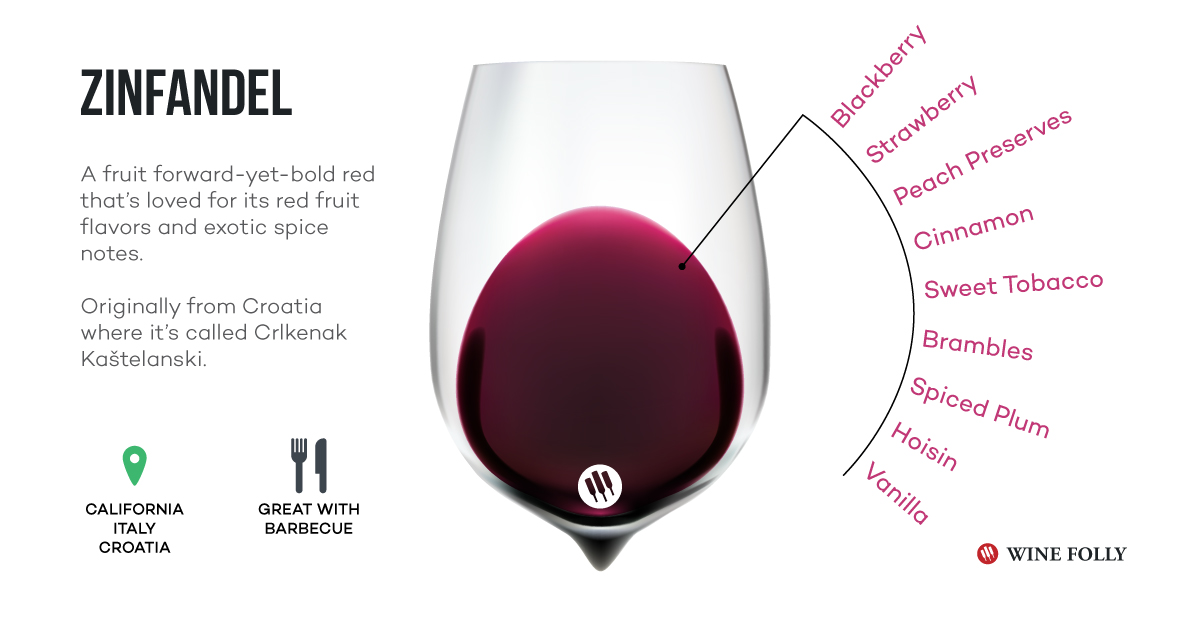
Zinfandel wine is a bold, fruit-forward red loved for its jammy fruit and smoky, exotic spice notes. It’s also made into a sweet rosé called White Zinfandel.
Primary Flavors
- Blackberry
- Strawberry
- Peach Preserves
- Cinnamon
- Sweet Tobacco
Taste Profile
Handling
-
SERVE
60–68°F / 15-20°C
-
GLASS TYPE
Universal
-
DECANT
30 Minutes
-
CELLAR
5–10 Years
SERVE
60–68°F / 15-20°C
GLASS TYPE
Universal
DECANT
30 Minutes
CELLAR
5–10 Years
Food Pairing
Zinfandel pairs well with Moroccan and Turkish spices that complement its cinnamon-spice notes. Additionally, try Pizza Rustica, a traditional Puglian wafer-thin calzone stuffed with roasted onions, tomatoes, anchovies, and olives.

Meat Pairing: The hearty, bold flavors in Zinfandel make it a natural companion for the rich and flavorful world of BBQ. Try ribs, grilled chicken, roast lamb, pulled pork, pork chops, blackened salmon, bacon-wrapped tenderloin, game meats, and burgers!
Cheese Pairing: Think rich and bold, such as sharp cheddar, smoked gouda, and grilled halloumi.
Vegetable Pairing: Go for vegetables with big flavor such as caramelized onion, tomatoes, grilled eggplant, mushrooms, olives, zucchini, or even baked beans.
Spices & Herbs: Think curry spice. Go for anything smoked or charred: cajun spice, cumin, black pepper, sage, rosemary, cardamom, cinnamon, fennel, black tea leaf, coffee, and cocoa.

White Zinfandel
White Zinfandel is a kind of rosé. It is sweet and has aromas of bright red fruits, such as strawberries, raspberries, cherries, and rich citrus notes.
Whether you love or hate it, White Zinfandel’s popularity helped sustain demand for Zinfandel grapes and may have contributed to the preservation of some older vineyards.
The trend started in the 1970s a bit by accident. According to Sutter Home, a tank of their Oeil de Perdrix (a saignée rosé wine) got “stuck” in mid-fermentation. The yeasts died before eating all the sugars, and the wine was ruined!
However, when the winemaker tasted it, he found the bitterness in the wine had “disappeared” with the residual sugar. Better yet, customers loved it!

6 Fun Facts About Zinfandel
- Zinfandel has been touted as “America’s grape,” but it actually hails from Croatia and was likely brought to the USA in the early 1800s.
- The Italian name for the grape, Primitivo, comes from the Latin word “primitivus” and the old Italian word “primaticcio,” both mean “early ripener” or “first to ripen.”
- White Zinfandel isn’t white at all; it’s pink! But there is a rare white mutation of the grape.
- National Zinfandel Day is the 3rd Wednesday in November (Yes, Zin pairs excellently with turkey!).
- Zinfandel is notorious for uneven ripening, with underripe, ripe and raisined berries sometimes appearing in the same bunch. Raisined berries can concentrate sugars, contributing to the high alcohol levels often found in Zinfandel wines.
- Zinfandel berries are small and thin-skinned. Their relatively high skin-to-juice ratio can contribute to concentrated flavors, color and tannins.
Tasting Zinfandel Wine
The flavors in Zinfandel range depending on how ripe the grapes are.
Typically, wines from cooler areas have juicy red berry flavors on the nose, such as strawberry or raspberry. For wines made in warmer climates, flavors turn to deeper black fruits. Baking spice and an underlying peppery note are common notes, particularly in ripe, full-bodied examples.
On the palate, expect a full-bodied, lush, mouth-filling wine, usually with elevated alcohol (14%+ ABV). High-quality Zinfandel can have firm, structured tannins.
(Remember, styles vary by producer!)
Where Does It Grow?
- USA: ~45,840 acres / 18,551 hectares (mostly Lodi, Paso Robles, North Coast, and Sierra Foothills)
- Italy: ~34,337 acres / 13,896 hectares (mostly Puglia)
- Macedonia: ~2,471 acres / 1,000 hectares
- Australia: ~215 acres / 87 hectares
- Others: Chile, Canada, South Africa
Total Vineyard Area: 83,148 acres (33,649 hectares) (Source: University of Adelaide, 2021)
Zinfandel (aka Primitivo) is California’s fourth most planted wine grape (after Chardonnay, Cabernet Sauvignon, and Pinot Noir). It performs well in warm, sunny regions and is very sensitive to terroir (because of its thin skin).
It wasn’t until the 1990s that we learned of Zinfandel’s identical genetics to the Croatian grape Tribidrag (aka Crljenak Kaštelanski). Current history suggests it was imported to America during the early 1800s.
Zinfandel Regions to Explore

Lodi, California
Flavors: blackberry, peach yogurt, roasted plum, cinnamon, and sweet tobacco.
The climate in the Lodi wine region is Mediterranean with hot days and cool nights. Fortunately, it receives a moderating influence from the San Francisco Bay.
The Sacramento River Delta brings “delta breezes” that act like natural air conditioning. Soils here are sandy with some clay. Some soils are so sandy they completely resist grape phylloxera.

North Coast, California
Flavors: blackberry, black cherry, bramble, vanilla, and black pepper.
Within the North Coast region, Sonoma is diverse in both soil and climate. Long, warm (rarely hot) summer days and very cool nights receive cooling fog and ocean breezes, which give wines their freshness from acidity. Notable Zinfandel hotspots include Dry Creek, Rockpile, Alexander Valley, and the Russian River Valley.
Mendocino experiences high temperatures during the day but cools at night. The rich, well-drained soils give the wine tartness, acidity, and red berry notes.
Napa Valley has many volcanic soils, making rich, tannic, and smoky Zinfandel wines.

Sierra Foothills, California
Flavors: raspberry, cherry, blackberry, cranberry, and sweet baking spice.
The region consists primarily of sandy clay and granitic soils along the Sierra Nevada mountain range. Because of these soils, wines tend to offer high aromatic intensity and lighter color.
You can also expect lively acidity because the elevation makes for cool nights (and preserves acidity).
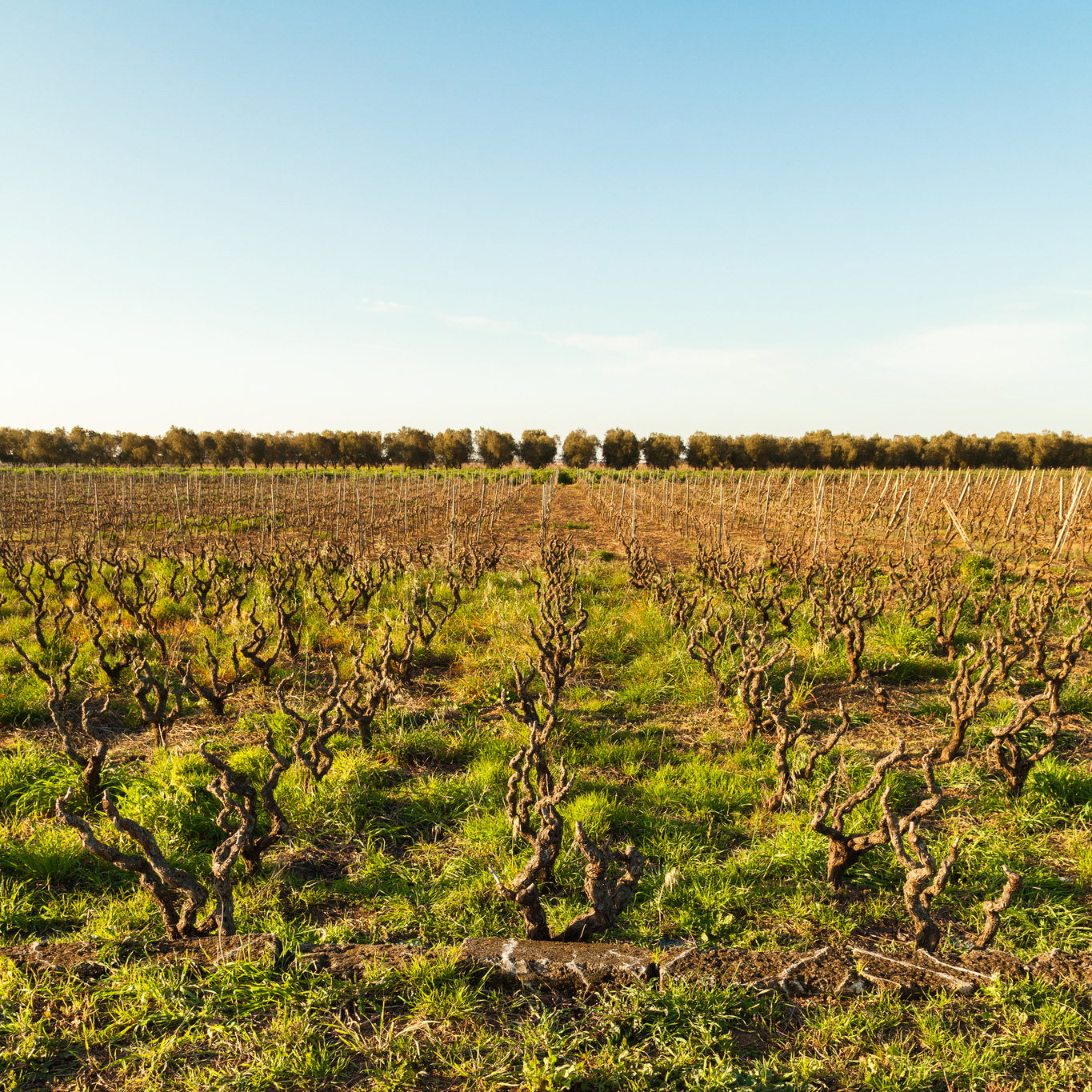
Puglia, Italy
Flavors: raspberry, blackberry, baking spice, licorice, and Mediterranean herbs.
It’s common to find wines labeled by variety in Puglia, although there are also some official wine regions that specialize in Primitivo.
Primitivo di Manduria
This is a popular region for Primitivo, where the wines must contain at least 85% of the variety. Expect wines that are full-bodied and high in alcohol, with ripe dark-fruit flavors and spice. The Riserva category has a minimum alcohol requirement of 14% ABV.
Gioia del Colle
The name Primitivo is traditionally traced to the late 18th century, when a priest in the Gioia del Colle area selected an early-ripening vine. Nowadays, these wines have a reputation for being slightly more subdued in body and alcohol.
Primitivo di Manduria Dolce Naturale
A true sweet wine designation for Primitivo. These are produced in a late-harvest style, where grapes can raisinate to increase sugar content.