

Finding red wine for beginners is easy. But finding one that actually teaches something? That’s a little more interesting. With more than 1,300 wine grape varieties out there, there’s plenty to taste and plenty to be confused by.
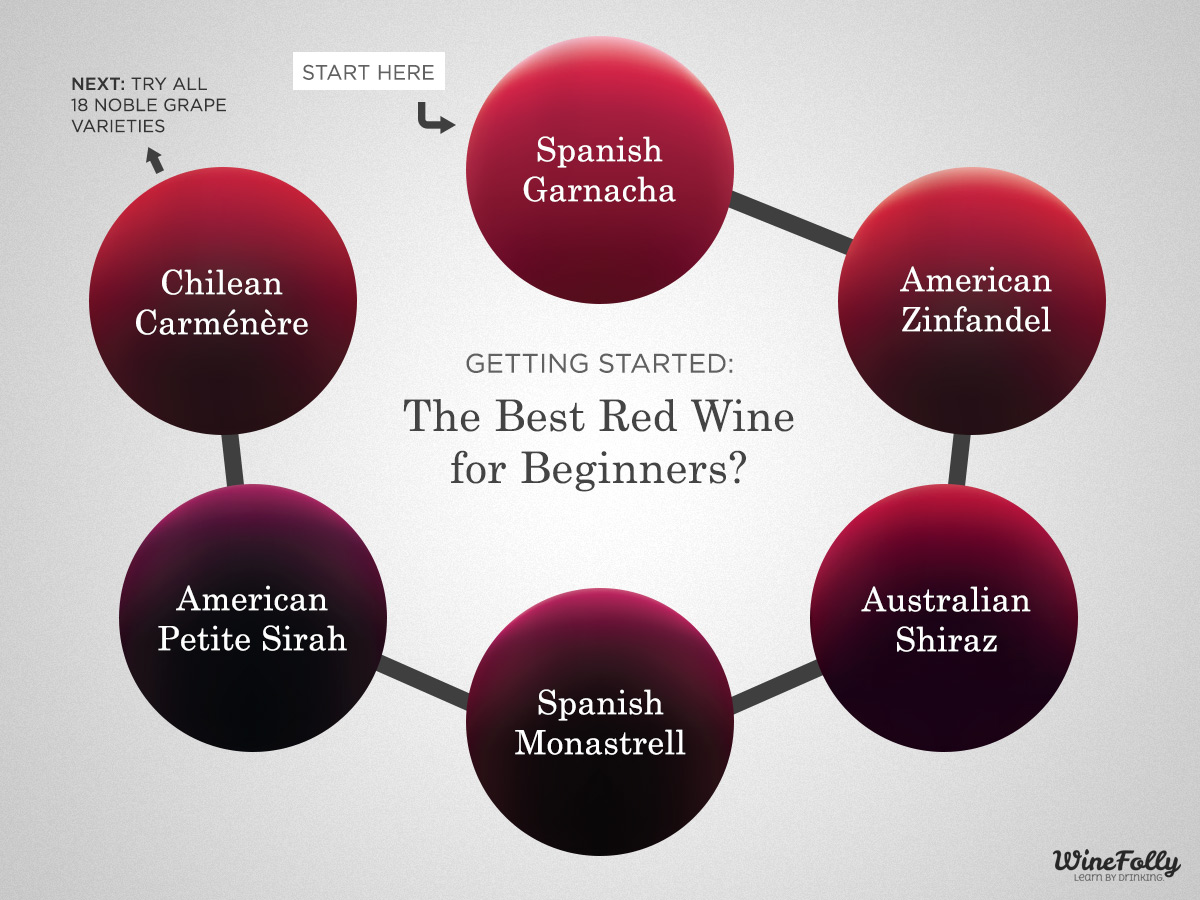
So we picked six wines that make good starting points. Each one highlights a different part of the red wine experience, from mouth-watering acidity and warming alcohol to full body, tannin, and those unmistakably “green” flavors.
Consider it Red Wine 101, with homework you’ll actually want to drink.
Red Wine for Beginners
These wines were selected for three reasons: they are bolder on the flavor intensity spectrum, they have easy-to-identify fruit flavors, and they can often be found for less than $20.
- Garnacha (a.k.a. Grenache)
- Zinfandel (a.k.a. Primitivo)
- Shiraz (a.k.a. Syrah)
- Monastrell (a.k.a. Mourvèdre)
- Petite Sirah
- Carménère
Why Varietal Wines Are Better for Learning
In the U.S., a wine labeled with a single grape variety generally must contain at least 75% of that variety. That means a wine labeled “Cabernet Sauvignon” can contain up to 25% other grape varieties, depending on the applicable regulations.
Wine blends taste great but they are not that useful if you’re trying to learn. Try to find 100% single-varietal wines when expanding your wine palate.
Fortunately, the six varieties below are commonly available as varietal wines from around the world, making them useful for learning what each grape brings to a wine.
Spanish Garnacha (a.k.a. Grenache)
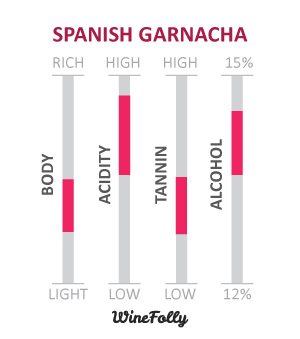
Look for notes of raspberry, candied cherry, and orange.
This wine is all about understanding how to taste acidity. Garnacha from Spain tends to have bright berry flavors and moderate acidity. It’s relatively easy to pick out the mouth-watering acidity because it’s often laced with citrus flavors (e.g. grapefruit or orange). Research suggests that wine acidity and pH can influence the perception of tannin and astringency, although the relationship is more complicated than acidity alone. By the way, Garnacha is an incredibly important wine grape outside of the U.S. — it’s grown primarily in Spain and Southern France where it is the major blending grape in Côtes du Rhône wines.
California Zinfandel
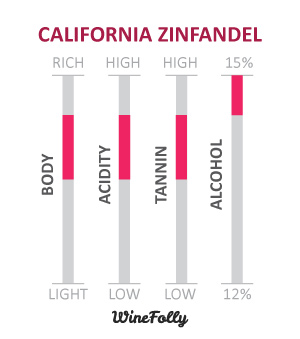
Look for notes of raspberry, chocolate, and cinnamon.
Zinfandel will help you understand how alcohol affects flavor. Be sure to select a Zinfandel with about 15% ABV for this to work — and invite a buddy with you to help drink it. Higher-alcohol wines can have a warming or spicy sensation, particularly when the alcohol is prominent. Alcohol not only adds a tingling sensation, it also adds the perception of body. Studies have shown that higher alcohol can reduce the perception of astringency in wine. You might notice this effect the next time you try Zinfandel.
South Australian Shiraz (a.k.a. Syrah)
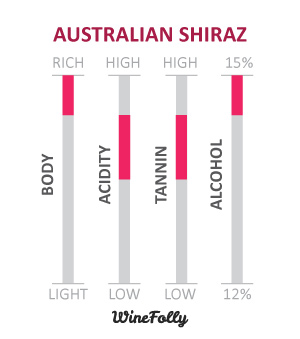
Look for notes of blackberry, blueberry, pepper, and coffee.
Shiraz will help you understand what a full-bodied wine is all about. A few producers of Shiraz in Australia have moved toward a lighter style, but if you get a truly inky Shiraz, say from McLaren Vale or Barossa Valley, you’ll notice how boldly flavored a wine can get. Of course, there is a lot going on with the grapes and winemaking to create a wine this bold including higher alcohol, ripe fruit, extraction, oak, and other winemaking choices. Australia is particularly well known for bold, varietally labeled wines, especially Shiraz. When you taste one, focus on the profile and texture in your mouth.
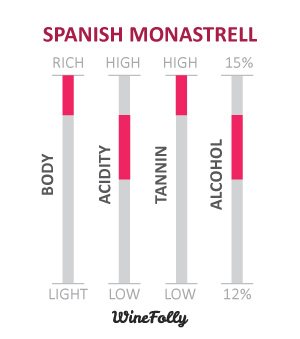
Spanish Monastrell (a.k.a. Mourvèdre)
Look for notes of blackberry, roasted meats, and black pepper
Monastrell is a useful comparison to Shiraz because both can produce powerful, full-bodied reds, but their flavors and textures can differ depending on climate and winemaking.
Monastrell is widely planted in southeastern Spain. It makes a deep dark full-bodied wine with very rustic notes including tar, roasted meats, and tobacco smoke. Monastrell can offer savory, earthy characteristics alongside its dark-fruit flavors, making it an interesting way to explore a more savory style of red wine. Some particularly good examples come from Yecla in southeastern Spain
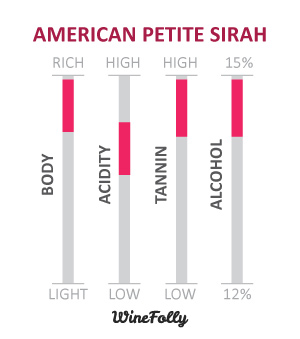
California Petite Sirah
Look for notes of jam, black pepper, and cedar.
Petite Sirah will help you understand what tannin is all about. Petite Sirah has small berries, which means a higher skin-to-juice ratio and, during winemaking, the potential for greater extraction of tannin and color. When you taste it, you’ll notice how the texture of tannin dries your mouth out and sits on your tongue (and sometimes teeth!). If you enjoy that drying, grippy texture, you may also enjoy other high-tannin wines such as Nebbiolo and Tempranillo.
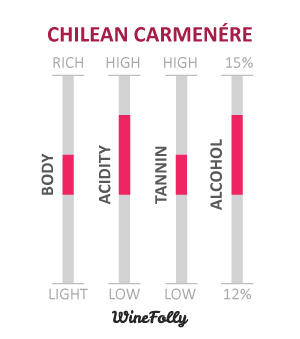
Chilean Carménère
Look for notes of black cherry, clove, and bell pepper.
Carménère will help you understand herbaceous or ‘green’ wines. Even when Carménère shows ripe cherry and plum flavors, it can also have a subtle bell-pepper or herbal character. These green, bell-pepper aromas are associated with methoxypyrazines, compounds found in several grape varieties, including Cabernet Sauvignon, Cabernet Franc, and Carménère. While these green notes can be desirable in certain wines, they can also be associated with underripe grapes or certain cooler or challenging growing seasons.