

No matter your budget, we all want good deals on great-tasting wines. The challenge is that finding great value wine isn’t always straightforward. Wine supply changes every year, shaped by weather, harvest size, and shifting consumer demand. So, the question is:
How does one adapt quickly to the ever-changing wine market?
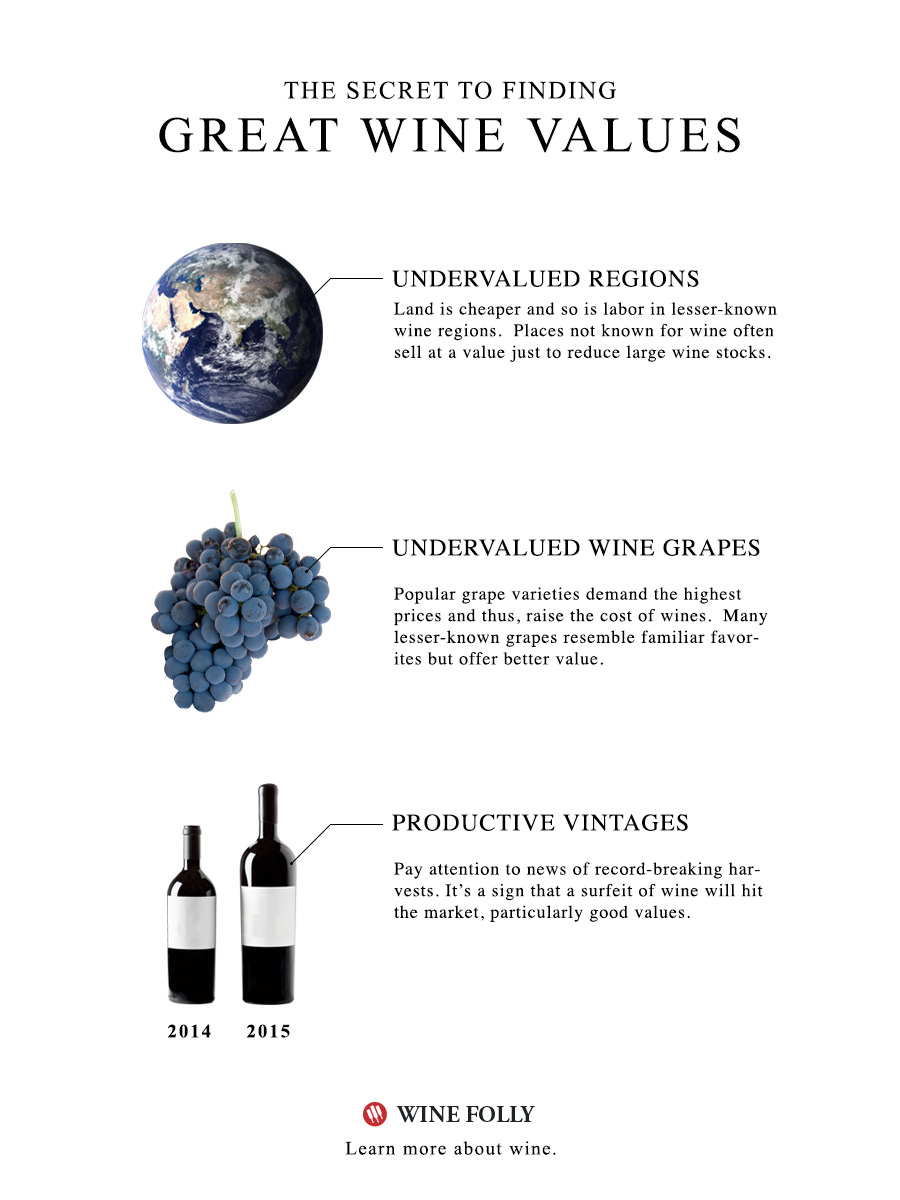
Of course, Wine Folly can help you discover new regions and develop your palate. Smart wine shoppers look for three things: undervalued regions, overlooked grape varieties, and large vintages.
Undervalued Wine Regions
Everyone (and *definitely* their mom) knows about Napa Cabernet, Burgundy Pinot Noir, and Tuscan Brunello di Montalcino. And, sure enough, these wines are some of the most expensive wines in the world. But, if you’re looking for amazing wine values, don’t drive these well-traveled paths.
Even in today’s hyper-connected wine world, hundreds of regions still fly under the radar while producing outstanding wines. Take Vinos de Madrid DO, for example. This is a small, high-elevation vineyard area in central Spain that quietly produces some of the most amazing Grenache-based blends, along with Syrah and international varieties. The region remains relatively unknown outside Spain due to limited export presence and smaller production.
Speaking to the smart shopper again, here’s a leg up on where to start looking. The following lesser-known regions impress time and time again:
A Few Regions to Find Big, Bold, and Lush Wines
- Douro Valley, Portugal: Known mainly for Port wine, it’s the dry wines from this area that will blow your mind. Douro reds: powerful, deeply colored wines driven by native grapes like Touriga Nacional and Touriga Franca.
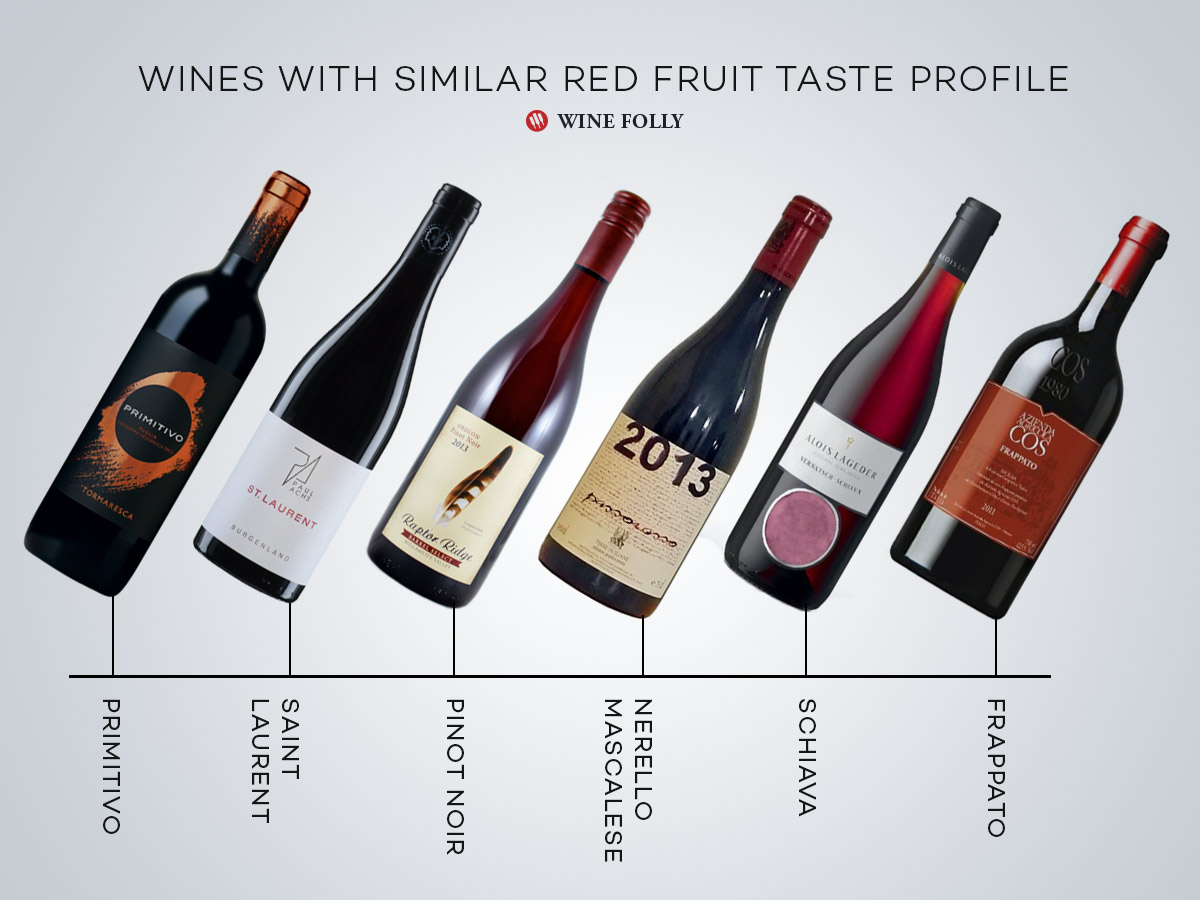
- Puglia, Italy: Primitivo di Manduria is just one of the many surprises you’ll discover in the boot of Italy.
- Yecla and Alicante, Spain: These are two regions in Spain that make excellent red wines with both Cabernet Sauvignon and the regional grape, Monastrell (aka Mourvèdre).
- Columbia Valley, Washington: Washington State remains one of America’s strongest sources of high-quality, fairly priced red wine.
- Lodi, California: This is a massive region with a very long history of winemaking in California’s central valley. Expect bold, smoky red wines from the region’s many old vines.
- Roussillon, France: This is a region that almost touches the border of Spain. Keep your eyes peeled for Maury Sec, a super value GSM blend.
- Sicily, Italy: So many great valued wines to try here, from the structure Nero d’Avola to the elegant Nerello Mascalese. You’ll also be surprised by Grillo – a lemony white wine.
A Few Regions to Find Elegant, Mineral-Driven Wines
- Naoussa, Greece: If you close your eyes and taste this wine that’s made of Xinomavro, you’ll be surprised at how similar it is to Barolo.
- Umbria, Italy: Leave the hype of Tuscany and Brunello to the higher elevation vineyards of Umbria making incredible Sagrantino and Sangiovese.
- Bierzo, Spain: If you love European wines, make a point of seeking out a Mencía-based wine.
- Uruguay and Brazil: Uruguay and Brazil are emerging sources of refined, cool-climate wines.
- Patagonia, Argentina: A very different face of the Argentine wine industry is happening in the south around the city of Neuquén. Pinot Noir and Chardonnay show serious potential.
- Villány, Hungary: Kékfrankos (which is also known as Blaufränkisch) produces deep, brooding wines in a classic, almost Bordeaux-like style that’s sometimes blended with Cabernet Franc. Go Hungary!
- Mendocino, CA: Mendocino is one of the most exciting regions in California right now for cool-climate Chardonnay and Pinot Noir. Surprisingly, prices are still reasonable.
P.S. There are many more than just these. This is just a starter list!
Undervalued Grapes
A quick search in the Wine Spectator ratings database returns more than 50,000 Cabernet Sauvignon reviews, but fewer than one hundred for Bobal. This isn’t because Bobal is a rare grape. In fact, it’s one of the most planted red grapes of Spain. It’s just not that well-known. That said, a few wineries are making delicious, punchy yet plush reds for only about $10 a bottle. A price like that is hard to beat! So, make it a habit of exploring grape varieties you may never have heard of before. And remember, if life gives you bad wine, make Sangria.
To get you started, here are some lesser-known varieties that have surprised us recently:
Red Grapes
- Montepulciano: It was long considered a throwaway grape until producers in Abruzzo realized it was their pride and joy. There is still some variation, but you’ll do well to seek out wineries with good ratings or who are featured in Gambero Rosso’s annual book
- Monastrell: It’s expensive when it’s called Mourvèdre in France, but in Spain it’s called Monastrell and it’s way cheaper!
- Touriga Nacional: Touriga is definitely Portugal’s flagship grape, prized for its deep color, powerful tannins, and floral aromatics.
- Alicante Bouschet: Another find from Portugal (well, not originally), making deep, brooding red wines with a smoky-sweet finish.
- Pinotage: South Africa’s signature grape (a cross between Pinot Noir and Cinsault.
- Bonarda: What the heck? You mean Argentina has gobs of Bonarda and no one has ever heard of it? Sheesh.
- Carignan: You’d think 40 years would be enough time to prove old vine Carignan is actually great.
White Grapes
- Assyrtiko: Chablis, you better watch out!
- Garganega: More famously known as Soave, produces remarkable Pinot Gris-like peachy flavors.
- Vermentino: Step aside Sauvignon Blanc, Vermentino is here.
- Grillo: The perfect, minerally white wine.
- Grenache Blanc: This one is a game-changer. You’re thinking you’re drinking a light white wine, and then, you start to taste the structure and body in this wine. Grenache Blanc is a grower, not a shower.
- Marsanne: It’s like Chardonnay and Viognier made a beautiful baby, even though they’re not related at all.
- Chenin Blanc: This grape is pretty well known (and sometimes high-priced) from France, but we can’t believe no one has figured out South Africa’s biggest secret!
P.S. Again, we had to cut ourselves off at just seven to give you a solid starter list.
Over-Productive Vintages
You don’t necessarily need to get into the nitty-gritty when researching vintages (although it can be fun!). Keep a lookout for over-produced vintages. Big harvest years usually mean wineries produce more wine than usual, which often leads to better prices. That’s great news for value hunters!
Wine Vintage Intelligence
Get the details for yourself! Here are three of our favorite resources for wine vintage information. The last one (Jancis) is way more detailed and useful for those in the biz!