

This white wines list is designed to help you explore the wide range of white wine styles, from light and zesty to rich and sweet.
White wine is far more diverse than most people realize. Beyond the familiar bottles on store shelves lies a huge spectrum of grapes, regions, and flavor profiles. Instead of memorizing dozens of varieties, it helps to see how wines group together by style.
This visual guide organizes both well-known and lesser-known varieties into major flavor categories so you can quickly understand how they taste and decide what to try next. Salut!
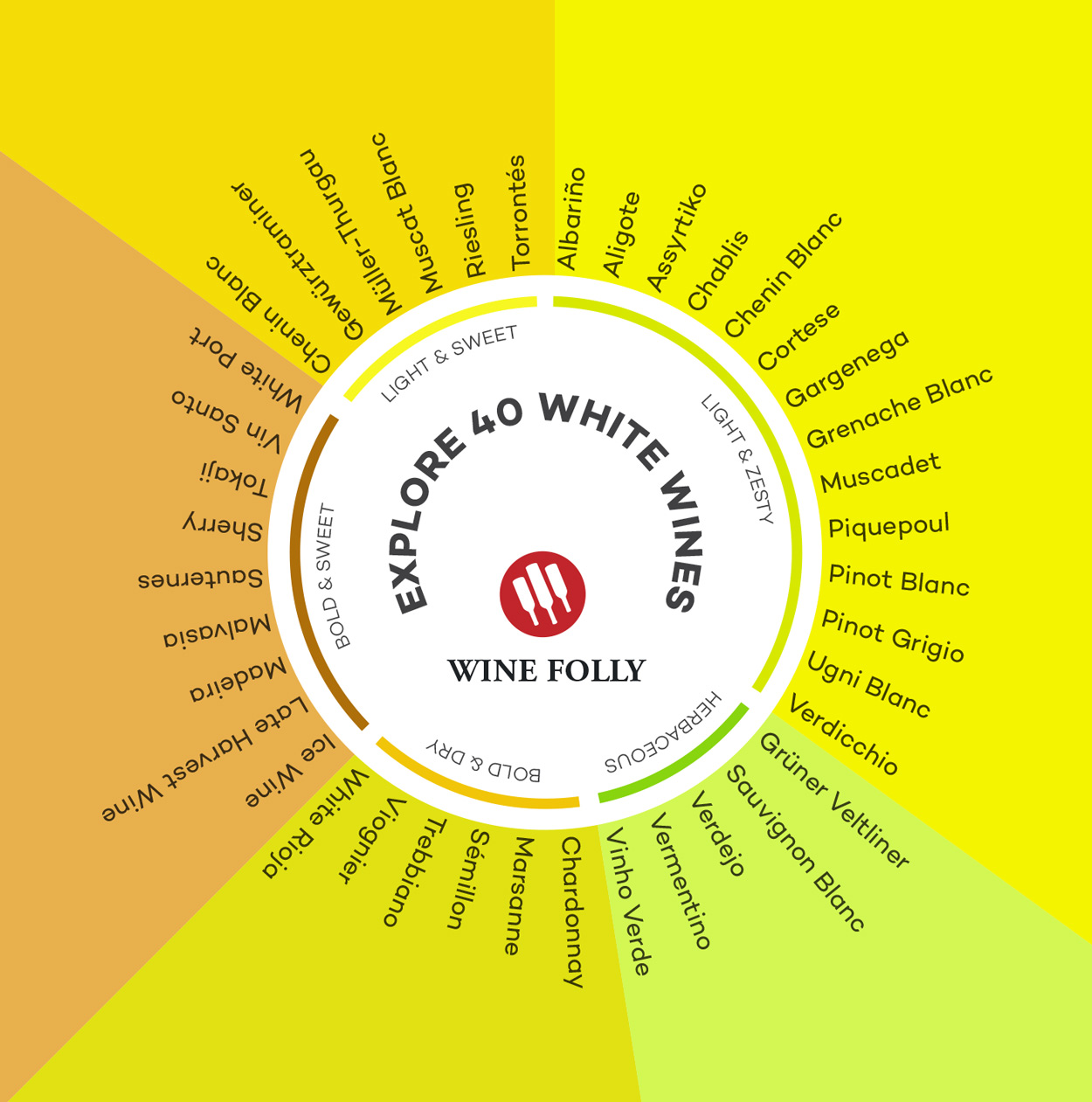
A White Wines List for Beginners
Light & Zesty
Light & Zesty whites are crisp, refreshing wines with high acidity and a clean, bright finish. They are often fermented in stainless steel to preserve their natural fruit flavors and vibrant citrus or green apple notes. These wines typically come from cooler coastal or mountainous regions, which help maintain their sharp, refreshing character.
How to identify this style: Light-bodied, low to moderate alcohol, high acidity, flavors of lemon, lime, green apple, or subtle minerality. Perfect for salads, seafood, and dishes that benefit from a bright, refreshing wine.
- Albariño: A crisp, aromatic grape from northwest Spain, known for citrus, green apple, and saline notes.
- Aligoté: Crisp Chardonnay relative from Burgundy; high acidity, light-bodied, citrus and green apple flavors; often used in blends or Bourgogne Aligoté AOC.
- Assyrtiko: A mineral-driven grape from Greece, high in acidity, often from volcanic soils.
- Chablis: A style of Chardonnay from Burgundy, France, usually unoaked or lightly oaked; known for flinty minerality and bright citrus.
- Chasselas: Rare Swiss white grape; subtle, neutral, mineral-driven, often consumed young; delicate body and low aromatics.
- Chenin Blanc: Versatile white from the Loire Valley, France, and South Africa; medium-bodied with bright acidity, flavors of apple, pear, and citrus, ranging from crisp dry to honeyed sweet.
- Cortese (Gavi): Italian grape from Piedmont; light-bodied, crisp, citrus- and almond-flavored; usually unoaked and refreshing.
- Friulano: A white grape from northeastern Italy; historically called Sauvignon Vert, but not identical to Sauvignon Blanc.
- Garganega: Main grape in Soave, Italy; light to medium-bodied, citrus, almond, and slight floral notes; bright acidity.
- Grenache Blanc: Mediterranean white; medium-bodied, citrus and white peach flavors, sometimes herbal; grown in Spain and Southern France.
- Muscadet: Loire Valley, France; light-bodied, high acidity, crisp citrus and saline notes; often paired with seafood.
- Picpoul de Pinet: Languedoc, France; bright acidity, citrus and green apple flavors; often called “lip-stinger” for its zesty nature.
- Pinot Blanc: Light- to medium-bodied, subtle apple or pear aromas; grown in France, Germany, and northern Italy.
- Pinot Grigio/Pinot Gris: Pinot Grigio from northern Italy (especially Trentino) is fresh, fruit-forward, and balanced, with crisp green apple and pear flavors shaped by cool alpine terroir, while Pinot Gris from Alsace and Oregon is richer, fuller-bodied, and spiced, highlighting the grape’s aromatic intensity and textural depth.
- Verdejo: Spanish grape from Rueda; light-bodied, crisp, herbaceous, with citrus and melon notes.
- Verdicchio: Italian white from Marche; medium-bodied, citrus, almond, and green apple; notable for crisp acidity.
- Xarel-lo: Catalonia, Spain; primary grape in Cava; bright acidity, green apple, citrus, and subtle herbal notes.
Herbaceous
Herbaceous whites are defined by their aromatic green, vegetal, or herbal notes, often evoking fresh herbs, bell pepper, jalapeño, or freshly cut grass. These wines are generally light- to medium-bodied, with crisp acidity and flavors shaped by the grape variety and cool-climate growing regions. Many are fermented in stainless steel to maintain freshness and express the grapes’ signature aromatics.
How to identify this style: Light- to medium-bodied, high acidity, distinctive herbal or “green” aromas, often with citrus or stone fruit undertones. These wines shine when paired with salads, herb-driven dishes, and light vegetable-focused cuisine.
- Erbaluce: A rare grape from Piedmont, Italy, producing crisp wines with herbal and citrus notes.
- Grüner Veltliner: Austria’s signature white, known for green pepper, white pepper, and citrus, with bright acidity.
- Sancerre: Loire Valley wines made of Sauvignon Blanc, lean and mineral-driven, sometimes herbaceous; mostly stainless steel-fermented.
- Sauvignon Blanc: Crisp, aromatic white wine that grows worldwide; light- to medium-bodied with high acidity, flavors of citrus, green apple, and fresh herbs, often showing grassy or mineral notes.
- Vermentino: Light- to medium-bodied; green apple, citrus peel, and herbaceous notes; grown in Italy, Sardinia, Corsica.
- Vinho Verde: A light, crisp white wine style from northern Portugal; can be single-variety or blends, often slightly spritzy.
Bold & Dry
Bold & Dry whites are full-bodied wines with pronounced flavors and often a creamy texture from oak or lees aging. They tend to have moderate acidity balanced by richer fruit notes like stone fruit, vanilla, or honey, and their mouthfeel can feel rounder and more weighty than lighter whites. These wines are frequently made in warmer climates or with oak fermentation to enhance structure and complexity.
How to identify this style: Full-bodied, moderate acidity, flavors of ripe stone fruits, citrus, and often vanilla or baking spice from oak. Look for a creamy or textured mouthfeel. Ideal with roasted poultry, rich seafood dishes, or buttery sauces.
- Chardonnay: Particularly oak-aged styles (e.g., Burgundy, California) with stone fruit, vanilla, and creamy texture.
- Marsanne: Rare in France and the US, often full-bodied, nutty, and slightly honeyed.
- Sémillon: Can be lean or rich; often blended with Sauvignon Blanc, develops waxy, honeyed notes when oak-aged.
- Trebbiano: High-acid, neutral grape often used in blends or brandy production; light and crisp when unoaked.
- Viognier: Full-bodied, aromatic grape with peach, apricot, and floral notes; often from Rhône or New World regions.
- White Rioja: Can be fresh and unoaked or richer with oak aging; flavors range from citrus to vanilla.
Light & Sweet
Light & Sweet whites are slightly sweet wines that balance subtle residual sugar with bright acidity, creating a refreshing and aromatic profile. They often showcase floral, peach, or apricot notes, and the sweetness is typically gentle enough to complement food rather than overpower it. These wines are usually made from aromatic grape varieties or via early-harvest grapes to preserve fragrance and natural sweetness.
How to identify this style: Light-bodied, low to moderate alcohol, crisp acidity balanced with subtle sweetness, flavors of stone fruit, citrus blossom, or tropical fruits. Perfect for spicy dishes, fresh fruit, or as a lightly sweet aperitif.
- Gewürztraminer: Aromatic, floral, lychee- and spice-driven grape; naturally slightly sweet or balanced with acidity.
- Müller-Thurgau: Light, aromatic grape from Germany; low acidity, often slightly sweet.
- Moschofilero: Greek grape with floral aromatics and gentle sweetness; bright acidity balances sugar.
- Muscat Blanc: Sweet, aromatic grape with orange blossom, peach, and tropical fruit flavors.
- Riesling: Very versatile; light-bodied with crisp acidity, ranging from dry to sweet.
- Torrontés: Aromatic grape from Argentina; floral, fruity, and slightly sweet with high acidity.
Bold & Sweet
Bold & Sweet whites are rich dessert wines that can be intensely aromatic and flavorful, often with concentrated fruit, honey, caramel, or nutty notes. These wines are made using techniques like late harvest, noble rot, or fortification to achieve high sugar levels while retaining enough acidity for balance. They’re best on their own or with desserts, cheeses, or chocolate.
How to identify this style: Full-bodied, high residual sugar, moderate to high acidity to balance sweetness, flavors of dried fruit, honey, or caramel. Look for a lingering, viscous mouthfeel. Best enjoyed as dessert or with strong, flavorful cheeses.
- Ice Wine: Made from grapes naturally frozen on the vine; intensely sweet with high acidity and concentrated fruit flavors.
- Late Harvest: Wines from grapes picked late to concentrate sugar; can be from multiple grape varieties.
- Madeira: Fortified, oxidatively aged, sweet wines with caramel, nutty, and dried fruit notes.
- Malvasia: Often sweet dessert wines (e.g., Malvasia delle Lipari), aromatic with stone fruit and honey.
- Sauternes: French dessert wines from Bordeaux, made with botrytized Sémillon and Sauvignon Blanc grapes; honeyed and rich.
- Sherry (Cream, PX): Sweet styles of fortified wine from Jerez, Spain; PX (Pedro Ximénez) intensely sweet, Cream sherry moderately sweet.
- Tokaji: Hungarian dessert wine made with botrytized grapes; honey, apricot, and orange peel flavors.
- Vin Santo: Italian dessert wine from dried grapes; nutty, caramel, and dried fruit aromas.
- White Port: Fortified wine from Portugal; can range from dry to sweet, but sweet versions pair with desserts or cheese.